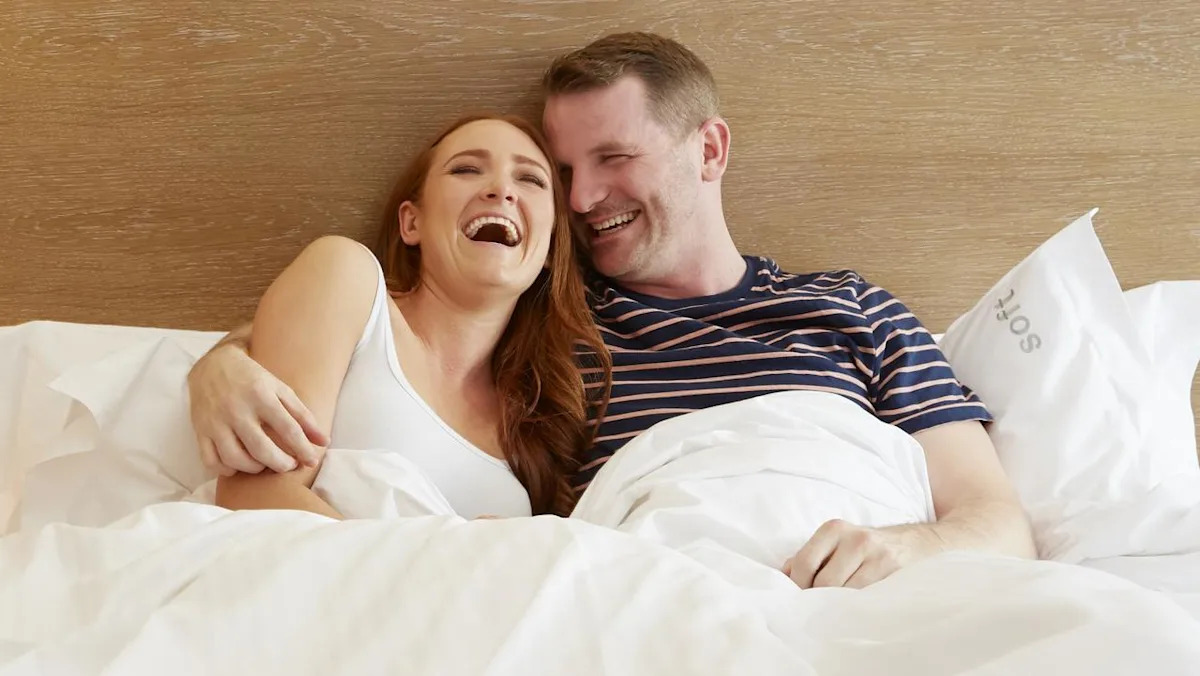
Australian travellers admit one of the first things they do when they arrive at a hotel room is check behind curtains, under beds and shut wardrobe doors before they can relax enough to sleep.
The surprising habit was revealed in new Holiday Inn Express-commissioned research that uncovered what Australians really get up to when they check into hotels.
While most people like to settle in as soon as they arrive, about a quarter of people claim their side of the bed straightaway, even when travelling alone.
Some Gen Z and Millennial guests jump on the bed to “test the bounce”, while others opt for an extra-long shower – 24 per cent of Gen Z travellers admit they enjoy lingering under the water because they are not paying the bill.

About 20 per cent of Aussie Gen Z travellers admit they plan their buffet breakfast while drifting off to sleep in a hotel room. Picture: Supplied
But once the lights go out, 87 per cent of Australians rely on help to fall asleep, with a third saying they need a wind-down routine before bed.
Background noise from the TV, music or white noise helps about 26 per cent of travellers drift off to sleep, while 18 per cent pack comfort items such as their own blanket, eye mask or pillow.
The research found Gen Z travellers shared some of the quirkiest habits, with 24 per cent checking they are alone in the hotel room before they can relax, 35 per cent meditating and 21 per cent having imaginary arguments in their head.
Others prefer to dream about what they’ll eat from the buffet for breakfast.

Tim Sharp said unfamiliar environments could create discomfort when travelling and small hotel room rituals helped create a sense of familiarity and control. Picture: Supplied
Positive psychology expert Tim Sharp said stepping into unfamiliar environments when travelling could create a level of discomfort even if you were excited to be there.
“These small rituals – whether it’s bringing your own pillow, playing familiar sounds or setting up the room in a certain way – help recreate a sense of familiarity and control,” he said.
“And that’s what allows us to properly switch off, relax and ultimately feel happier.”
Dr Sharp said having a good night’s sleep was everything when it came to health and wellbeing, and prioritising sleep in the way people focused on diet and exercise was just as important.
While good bedtime routines were different for everyone, he said it was important to develop a pre-sleep routine to wind down from the day.
“It’s really any habits that help you relax, calm down, still the mind a bit and deal with any stresses in life,” he said.
“What you do first thing in the morning is important for sleep as well.

Having a good night’s sleep is everything when it came to health and wellbeing. Picture: iStock
“Ideally, we want to get up and do some light exercise or get some sunlight first thing in the morning, and that actually follows through to what happens to us later that day and night.”
Dr Sharp said even if pre-sleep routines appeared quirky when travelling, doing something that made people feel comfortable and sleep better was important.
“When we’re at home we typically have our normal comforts, it’s of part of our life, but when we’re travelling and in a hotel room we need to create them a bit more consciously,” he said.
“In some ways it might look quirky, but I think it’s quite impressive in a way that people are doing these things to help them sleep better and then hopefully enjoy their work trip or holiday.”

Comfort and giving travellers less to think about have become so important when staying at hotels. Picture: Supplied
The research also found 71 per cent of travellers experienced racing thoughts – from tomorrow’s to-do list, work stress, money worries and even the cost of breakfast.
IHG Hotels and Resorts commercial, East Asia and Pacific vice-president Dean Jones said the findings highlighted how important comfort and giving travellers less to think about had become when staying at hotels.
“What this research shows is that travellers are creating their own comfort rituals when they’re away, and they’re looking for places that support that,” he said.
“We know even small touches can make a big difference to how quickly people settle in and properly switch off – whether it’s a great night’s sleep, a dark, quiet room or a simple, reliable morning routine.”