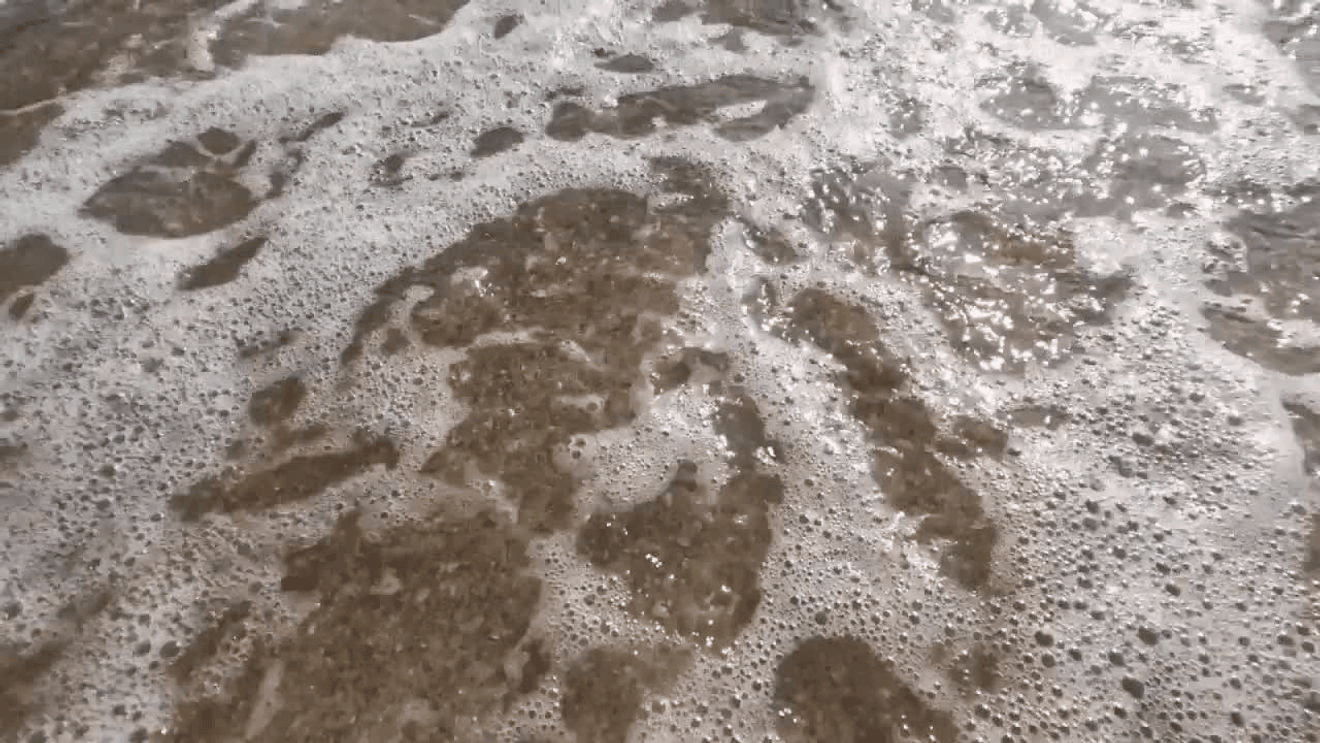
NORTHERN MICHIGAN, (WPBN/WGTU) — The Michigan Department of Health and Human Services released a warning to avoid the foam found in water on Friday. This comes as people start to get out on lakes, streams and rivers for the summer season.
Avoiding the foam may keep you healthier, but an important reminder as well is that the presence of foam doesn’t necessarily mean the water isn’t healthy.
“Avoiding foam is the best practice,” said Heather Smith, waterkeeper at the Watershed Center Grand Traverse Bay.
From far away, you may not even notice it, but get a little closer and chances are you have seen it.
“Foam is a naturally occurring phenomenon,” said Smith.
Naturally, because in order for foam to form on the surface of our waterways, you need two things first.
“A mechanical action, some sort of turbulence that introduces air into that substance and it allows it to bubble or form,” said Smith.
And second and this is where things can get a little concerning…
“It must contain a substance that is capable of bubbling or foaming and that could be from a natural source like decaying plant material, or it could be from a human-made chemical like PFOS, detergents, or some other chemical,” said Smith.
Our waterways have always had foam, but lately, the source of some of that foam, PFAS and pollutants, is concerning the point where the Michigan Department of Health and Human Services issued a warning to avoid contact with foam on our surface waters. In it…
Dr. Natasha Bagdasarian, the chief medical executive for the State of Michigan, explains, “The risk of PFAS exposure through your skin is low. However, you can accidentally swallow PFAS, as well as bacteria, algae, viruses and other chemicals, if you do not rinse off or bathe after touching foam.”
There is potential that the foam is created by a pollutant like PFAS, but even if it’s not, even if it’s naturally occurring, foam can serve like a spiderweb, catching and concentrating other things we shouldn’t consume.
“Even if natural, foam can contain things like bacteria, pathogens, viruses, chemicals,” said Smith.
Not all foam is a sign of pollution or a bigger environmental concern.
“It can occur without any sort of pollution source,” said Smith.
Unfortunately, all foam could pose a potential health risk.
“It’s really impossible to tell when you’re looking at foam if there is any sort of chemical component to it or if there are naturally occurring things like bacteria or viruses or pathogens that might pose a human health risk,” said Smith.
Bottom line foam doesn’t always mean pollution, but it should always be avoided.
“Rinsing off or bathing after water activities will help protect you, your family and your pets from harmful substances that may be in foam or water,” said Bagdasarian.
If you do have concerns over some foam that you may see, EGLE does have reporting hotlines, including a 24-hour pollution emergency hotline and an online form.
More communities around Michigan have posted signs on inland waterways where chemical foam is documented.
At the end of the day, the advice still stands, avoid the foam and rinse off if you do have contact.