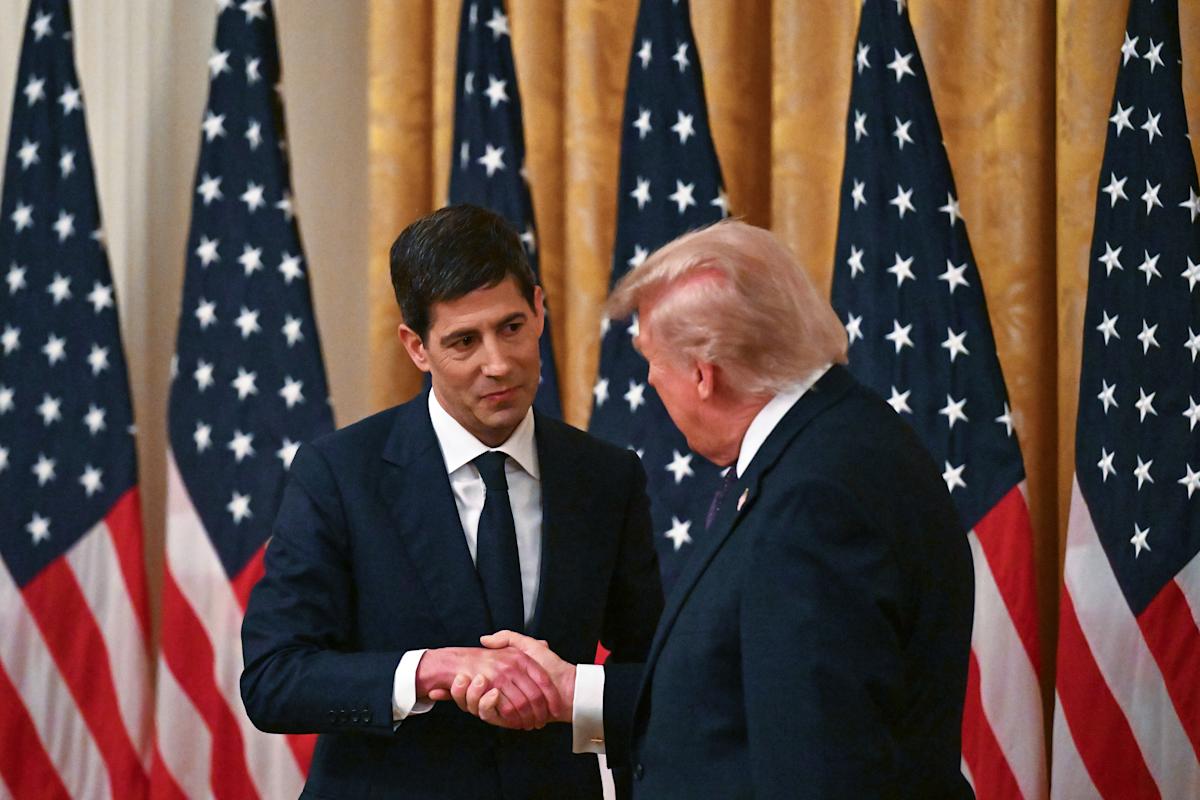
Newly sworn-in Federal Reserve Chair Kevin Warsh offered some telling comments Friday about how he may govern as head of the US central bank.
Warsh harkened back to former Fed Chair Alan Greenspan, the last chair to be sworn in at the White House, and implied that he is setting himself up in Greenspan’s mold.
“I’ve known five of my predecessors in this job, some of them quite well. But Chairman Greenspan was the first to tell me and show me what this role demands,” Warsh said during a ceremony in the East Room. “Like Alan, I intend to fill the role of chairman with energy and purpose, just the way Chairman Greenspan did.”
Greenspan is known for holding rates steady rather than raising them during the internet boom of the 1990s because he saw that inflation was not rising and thus productivity must be increasing, negating the need to raise rates.
Treasury Secretary Scott Bessent, who favored Warsh to be Fed chair, frequently cites Greenspan as a historical model for managing the US economy. Bessent favors Greenspan’s approach of resisting premature interest rate hikes during technological booms, advocating that the Fed keep monetary policy flexible to encourage growth.
Bessent argues that Fed officials should maintain an open mind and lower interest rates to spur investment. He often calls for the central bank to emulate Greenspan’s resistance to premature rate hikes to foster non-inflationary growth.
“The Fed needs to have merely an open mind. The open-minded maestro, former Fed Chairman Alan Greenspan, resisted premature rate hikes during the technology boom of the 1990s — and history proved him right,” Bessent said in a speech on Jan. 8.
Warsh said last year that he believed adoption of artificial intelligence would boost productivity, lower inflation, and create a path for the Fed to cut rates. He also said during his confirmation hearing that he believes members of the Fed should speak less frequently, pull back forward guidance, and stop telegraphing what the central bank will do before interest rate meetings. And he did not commit to holding a press conference after every policy meeting, a practice put in place by current Chair Jerome Powell that is closely watched by investors.
All are practices that resemble the Greenspan era.

“Our mandate at the Fed is to promote price stability and maximum employment,” Warsh said. “When we pursue those aims with wisdom and clarity, independence and resolve, inflation can be lower, growth stronger, real take-home pay higher.”
President Trump, during his speech on Friday, suggested that he wants lower interest rates to help paying down the national debt. The president noted that lower rates would allow economic growth to boom and that wouldn’t necessarily mean inflation — something Warsh has also said — but that growth would also help the US grow its way out of debt.