While her eight-year tenure as Michigan’s top executive is soon coming to an end, Michigan Democrats believe Gov. Gretchen Whitmer still holds incredible sway, and could move mountains legislatively, even in an era of divided government. She just needs to put that power to good use — which some Democrats believe hasn’t happened on a number of key issues.
But there was still time to make that right, as the short seven months left in Whitmer’s term was still plenty of time to pass needed good governance and transparency reforms.
That was the assessment of three House lawmakers who sat down on Friday with Attorney General Dana Nessel to discuss what they say are Michigan’s abysmal transparency laws and a broken Lansing political culture that allows tit-for-tat deals to flourish.
Two messages seeking comment from Whitmer’s communications team were not returned at the time of publication.
The conversation focused mainly on the BRITE Act, a set of bills sponsored by minority House Democrats that would beat back the influence of corporate lobbyists and financial interests on the state Legislature. The package consists of House Bills 4268, 4269, 4270, 4271, 4272 and 4273. It would also give sharper teeth to Michigan campaign and election finance laws, which Nessel has championed throughout her near decade of office.
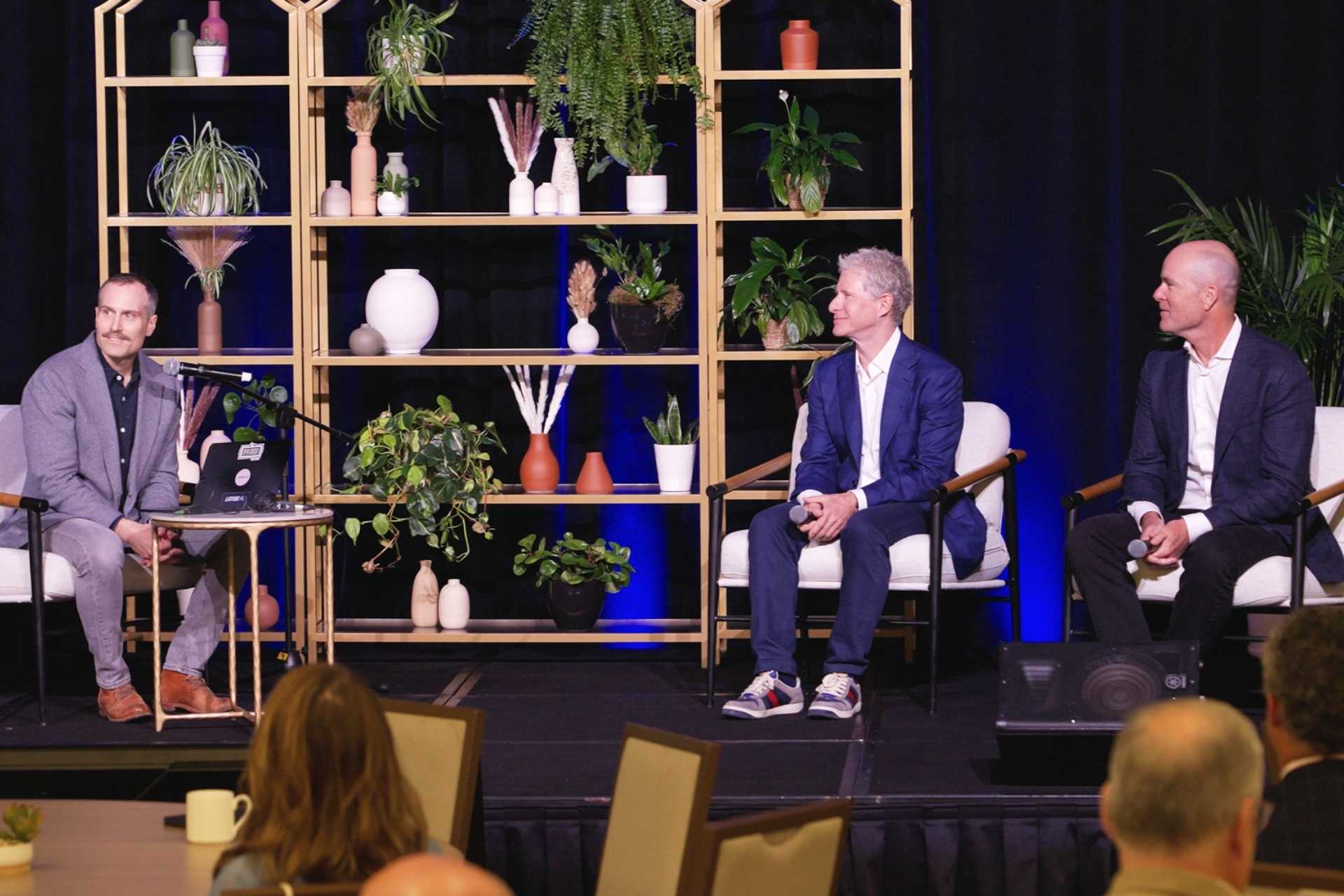
Democratic State Reps. Betsy Coffia of Traverse City, Carrie Rheingans of Ann Arbor and Erin Byrnes of Dearborn joined Nessel and members of the Capitol press corps for the conversation, which occurred on the eve of the Mackinac Policy Conference. Michigan’s annual confab for business leaders, politicians and other decision makers offers a unique opportunity for those disparate stakeholders to talk shop and grapple with the most pressing policy concerns facing the state. But some, like Nessel, also view the conference as just another venue for corporate interests to impact how lawmakers do their business.
Nessel’s discussion with lawmakers on Friday came with a disclaimer that the attorney general would not attend the conference, which starts on May 26.
“I’m not saying that nothing positive happens on the island, but that there’s also a lot of corruption that takes place there as well,” Nessel said. “What I mean by that is the sort of quid pro quos that sometimes culminate in us not having very good policies in our state and not making the kinds of advancements I think all of us here at this table would like to see.”
The dull teeth of Michigan transparency laws
It was in that vein that Nessel and her Democratic colleagues in the House discussed the need for the BRITE Act, as well as other key policy reforms like expanding the state’s Freedom of Information Act laws to include the Legislature and the governor’s office. At present, both entities are exempt from FOIA, preventing members of the press corps and average citizens from knowing the inner workings of government at its highest levels.
On the BRITE Act, the measure was initially a casualty of the 2024 lame duck session, which ended the short-lived Democratic trifecta that saw the party control both chambers of the Legislature, the executive offices and hold a majority on the Michigan Supreme Court. The trifecta, however, ended in chaos when competing corporate interests and the caucus’ own infighting stalled key pieces of the Democratic agenda that were still left on the table. It also set the stage for the incoming Republican House majority to exploit vulnerabilities with the Democratic House caucus.
The BRITE Act was reintroduced last year, but faces an uphill battle in the GOP-controlled House. FOIA reform faces the same hurdles. To the latter, House Speaker Matt Hall (R-Richland Township) has said time and again that extending FOIA was not on his to-do list, even as his namesake Hall Ethics and Transparency agenda seeks to route out government waste and corruption.
During the discussion, Nessel asked her Democratic colleagues if those reforms would have an opportunity to pass if a new Democratic trifecta emerges after the 2026 general election.
Byrnes was the ethics chair for the House caucus during the trifecta years. She said the reforms in the initial drafting stage were much broader than the bills that emerged, and that they did not really go as far as some of the sponsors wanted. Byrnes mentioned that the state and nation now exist under the precedent set by the U.S. Supreme Court’s nearly 20-year old Citizens United ruling, which granted nearly unfettered political speech and association rights to corporations and their political donations, proliferating the existence of super political action committees, and the use of dark money to influence decisions and elections.
Byrnes advocated for Citizens United to be overturned, calling it “incredibly detrimental” and “ruinous to our democracy.”
“We’re trying to do what we can at the state level to address that,” Byrnes said. “I think those bills are part of that. … We need to make sure that we’re catching things in the moment and not allowing people to skirt the laws that are on the books. Giving that more teeth is really important as well.”
Corporate roadblocks have stymied real change
To Nessel’s question, Coffia said that something like the BRITE Act could still face issues in a new Democratic trifecta if that trifecta continued to exist in the corporate-meets-Capitol bubble of shared interest.
“We inherited a culture that a lot of things have become normalized, that real regular people out in the real world are like, ‘that seems sketchy,’ or they say, but that’s corrupt,” Coffia said. “But they’ve become just the water you swim in. I genuinely believe that the vast majority of our colleagues came here because they want to do good work for our constituents, and the need is getting greater, whether it’s energy costs or housing costs or healthcare is breaking, our mental health system is broken. We don’t like the culture that’s here, we really don’t, and we would like to see major change. And the question then becomes, how do you mount the political will to do that?”
Coffia went on to say that without real reforms, the same kind of corporate interest roadblocks they are warning about will continue to control the state’s political processes, making people fearful to stand up to it and unwilling to act.
“At the end of the day, the question is, ‘is DTE okay with it? Is Consumers Energy okay with it? Is Blue Cross Blue Shield okay with it? When you’re evaluating whether you can do something or not, it’s fine as long as none of the major corporate donors have a problem with it,” Coffia said.”
From a legal perspective, Nessel lamented that when she got into office in 2019, she looked at all of the areas the BRITE Act addresses and said “there’s no law here for me to enforce.”
“This is why we can’t have nice things at Michigan, because of some of the lack of transparency, and the way dark money operates, and the way, I think, for normal people, they don’t understand how it’s not really just a quid pro quo, specifically a quid pro quo,” Nessel said. “Like, is bribery even really illegal when you look at the way things are done in Michigan? For a lot of people, they don’t understand how it’s not just business as usual here, and not understanding that we do have an opportunity to change it. We just have to have the will to do it.”
The invisible hand of Whitmer
Some of that starts with leadership, whether that’s the legislative quadrant leaders or Whitmer herself.
The governor campaigned in 2018 on expanding transparency and FOIA reform. Eight years later, transparency in state government remains inadequate, as Nessel noted, and the FOIA statute still has canyon-wide chasms.
Michigan Advance asked the panel if the executive office had done enough during the trifecta to help move the needle on those agenda items, and if it was doing enough now to assist in divided government — the Democrats still control the state Senate. The Advance also asked if Whitmer was seen as part of the solution or part of the problem.
Coffia said she can’t speak for her colleagues, but she did not believe Whitmer has done enough to assist her Democratic colleagues in the Legislature.
“I have concerns that… I call it the ‘invisible hand of Whitmer.’ Very powerful,” she said. “When we were in trifecta, I feel like she had a lot of influence in the House, particularly about what was ever allowed to move or not move. I would like to see her deliver on some of the things she campaigned on for transparency.”
Nessel said for her, it has been an issue about where certain political messaging was coming from.
“I still don’t know,” Nessel said. “If we had something that we were working on in our department … we’ll try in the House, we’ll try in the Senate and all we know is that we can’t get it through. It’s been stopped, and sometimes we don’t even know why or where that came from. That has happened quite a bit.”
Nessel elaborated by saying that it was difficult to work on meaningful legislation just to be told that it wouldn’t happen, in turn wasting departmental efforts and resources.
“Can you guys just be honest with me about it?” Nessel added.
Rheingans said Whitmer still commands immense popularity, and should she decide to put her might behind some of the transparency priorities, they would move faster through the Legislature and with bipartisan support.
“When that doesn’t happen, the opposite can happen, and it’s been very noticeable,” Rheingans said.
Coffia added that Whitmer meets with the caucus “very occasionally, to the point that I think I can visually remember the few times that she’s come up to meet … with the whole caucus.”
“It was a big priority for her to come down and advocate for the SOAR program,” Coffia said. “I have seen what it looks like when the governor chooses to use her muscle to make things happen. What if she did choose to use her incredible popularity and power on transparency, the way she has for SOAR and MEDC stuff? That could be a game changer.”
Coffia, despite her criticisms, said she has great respect for Whitmer, her career and the political brand she’s been able to create. The governor has also been in Lansing as a lawmaker and then governor since 2001, and Coffia said Whitmer knows how this works.
“I would love to see her, in her final year, lean in hard,” she said. “Let’s get FOIA done. Let’s get these reforms done. Let’s set Michigan up as her parting gift, in a way, that we are ready to rock and roll and deliver on the things that people need: healthcare, energy, all the stuff. That’d be amazing, and it would be a great legacy.”
“What a way to go out, and then run for president.”