Both sides of the aisle came together Thursday to oppose what had been a decadelong bipartisan effort to build a women’s history museum in Washington.
Subscribe to read this story ad-free
Get unlimited access to ad-free articles and exclusive content.

The legislation, which specified the museum’s site, was nearing the finish line but lost dozens of Democrats who had supported it just a month ago. It failed in the afternoon on a 204-216 vote, in which six Republicans joined all Democrats in voting no. Ten other Republicans did not vote.
Recent GOP revisions to the bill prompted scores of Democrats to speak out against the legislation in its current form, saying they would not vote for it as it stood.
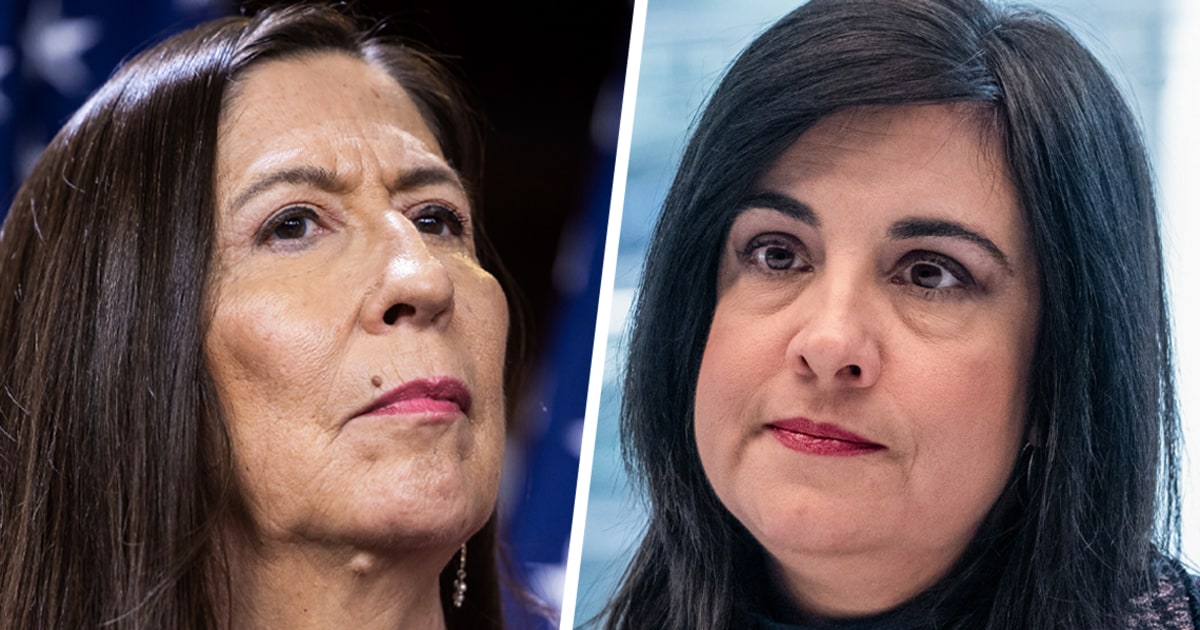
The legislation, authored in February 2025 by Rep. Nicole Malliotakis, R-N.Y., had as many as 231 co-sponsors, including 127 Democrats.
“It’s disappointing that politics got in the way of a women’s history museum getting built but, sadly, it’s a clear indication of just how polarizing Washington has become,” Malliotakis said in a statement after the vote.
Leadership held the vote open for nearly an hour in an attempt to get Republicans who opposed the bill to flip in favor. The attempts were ultimately unsuccessful, with Democrats pleading for leadership to close the vote and continue to other matters.
“The House’s loud rejection of this partisan bill is a signal that we need to return to the original bipartisan version that honors the diverse contributions women made to this country,” Rep. Teresa Leger Fernández of New Mexico, who leads the Democratic Women’s Caucus, said in a statement after the vote.
Julian Duque, a spokesperson for Leger Fernández, said she was ready to work on the bipartisan legislation, adding Republicans “just need to come to the table.”
At the end of last year, the bill had such strong bipartisan backing that even Republicans had grown frustrated with Speaker Mike Johnson, R-La., for not bringing it to the floor.
But Democratic support for the bill dwindled in recent weeks, as House Democrats argued an amended version would give President Donald Trump unilateral control over the museum’s ultimate site and its construction.
The revised bill specified the museum’s site — near the U.S. Holocaust Museum — and added that the president may designate an “alternative site” within 180 days of the bill’s passing. It would have also given the Smithsonian’s Board of Regents the license to “plan, design and construct” the museum’s building, subject to the approval of a set of architectural planning boards, including some members who were handpicked by Trump.
Those boards are also tasked with approving a slate of architectural projects Trump has spearheaded during his second term, like the White House ballroom and a triumphal arch.
The Democratic Women’s Caucus announced its formal opposition to the bill Monday after 146 Democrats signed a letter last month asking Johnson to restore the previous version of the bill.
They said that, in addition to giving Trump control over the museum’s site and design, the “eleventh-hour amendment” included language that said only “biological women” could be included in the museum, which they said targeted transgender women and girls and invited arbitrary enforcement. They also took issue with the legislation’s being unpaired from a plan to build a national museum for the American Latino.
Malliotakis said in an interview Wednesday that Democrats were “hiding behind” Trump’s having control to change the museum’s site, arguing that their opposition was rooted solely in the inclusion of a phrase that specified the museum would include only “biological women.”
“The Democrats started pulling out of the bill when an amendment was passed in the [House] Administration Committee that simply added clarification to that — that the museum is restricted to biological women only. I mean, it’s a women’s history museum. The fact that they would pull their support because it says it in the bill that it would only exhibit biological women is ludicrous to me,” Malliotakis said.
She added that she has been working closely with the White House and the Interior Department on the museum’s site and that the location could change only if the currently planned spot proved to be “not buildable.”
Rep. Judy Chu, D-Calif., lambasted the amended bill Wednesday before the vote, saying in a statement that Democrats had worked in “good faith to build bipartisan support” and that Republicans were the ones who added “culture war language.”
“Republicans shattered that bipartisan agreement by handing President Trump unilateral authority over where the Museum will be located, overriding the bipartisan Smithsonian planning process Congress worked on for years, just so Trump can turn it into another one of his personal political projects,” Chu said. “Then they layered on divisive anti-trans culture war language that had nothing to do with the original bipartisan bill.”
Leger Fernández called the revised bill an example of Republicans’ being “trans obsessed” and ceding control to Trump in remarks on the House floor Wednesday.
“It was a simple bill. You kind of ruined it with your trans obsession and your culture wars,” Leger Fernández said.
Johnson weighed in Wednesday, telling reporters that the “biological women” phrase had made Democrats “run for the hills.”
“The Democrats may be OK ceding control of their party to the most radical far-left people in the country, but Republicans are not going to be any party to that. We’re not going to stand for it, and neither are the overwhelming majority of Americans who still believe in common sense,” Johnson said.
The partisan divisions are in sharp contrast to earlier support from lawmakers in both parties, as illustrated by Malliotakis’ using the bill as a cudgel against Johnson in December, when she blamed him for delaying a floor vote as other Republican women openly expressed their frustration with him over a variety of issues. She said in an interview in January that she was given private assurances that Johnson would move the bill along.
The bipartisan goodwill was still publicly on display at an NBC News event last month with Rep. Debbie Dingell, D-Mich., and Malliotakis, who called the museum “critically important” to knowing the story of “amazing women who have come before us, who have helped us build this nation.”
Referring to the actor who played Wonder Woman in the 1970s, Lynda Carter, an advocate for building the museum, Dingell said at the event: “We don’t look at this as Democrats or Republicans or Wonder Woman. We look at it as people in this country should know the history of so many incredible women.”