Introduction: The Rise of America’s Outdoor Living Culture
The way Americans use their homes has changed dramatically over the past few years. What was once considered a simple backyard or patio space has now evolved into a fully functional living environment designed for comfort, entertainment, and lifestyle enhancement.
Across the United States, homeowners are investing heavily in outdoor furniture, patio décor, dining setups, and outdoor kitchens that offer the same comfort and sophistication as indoor spaces. From luxury seating lounges and fire pits to Wi-Fi-enabled grills and modular outdoor kitchens, outdoor living has become one of the fastest-growing lifestyle trends in the country.
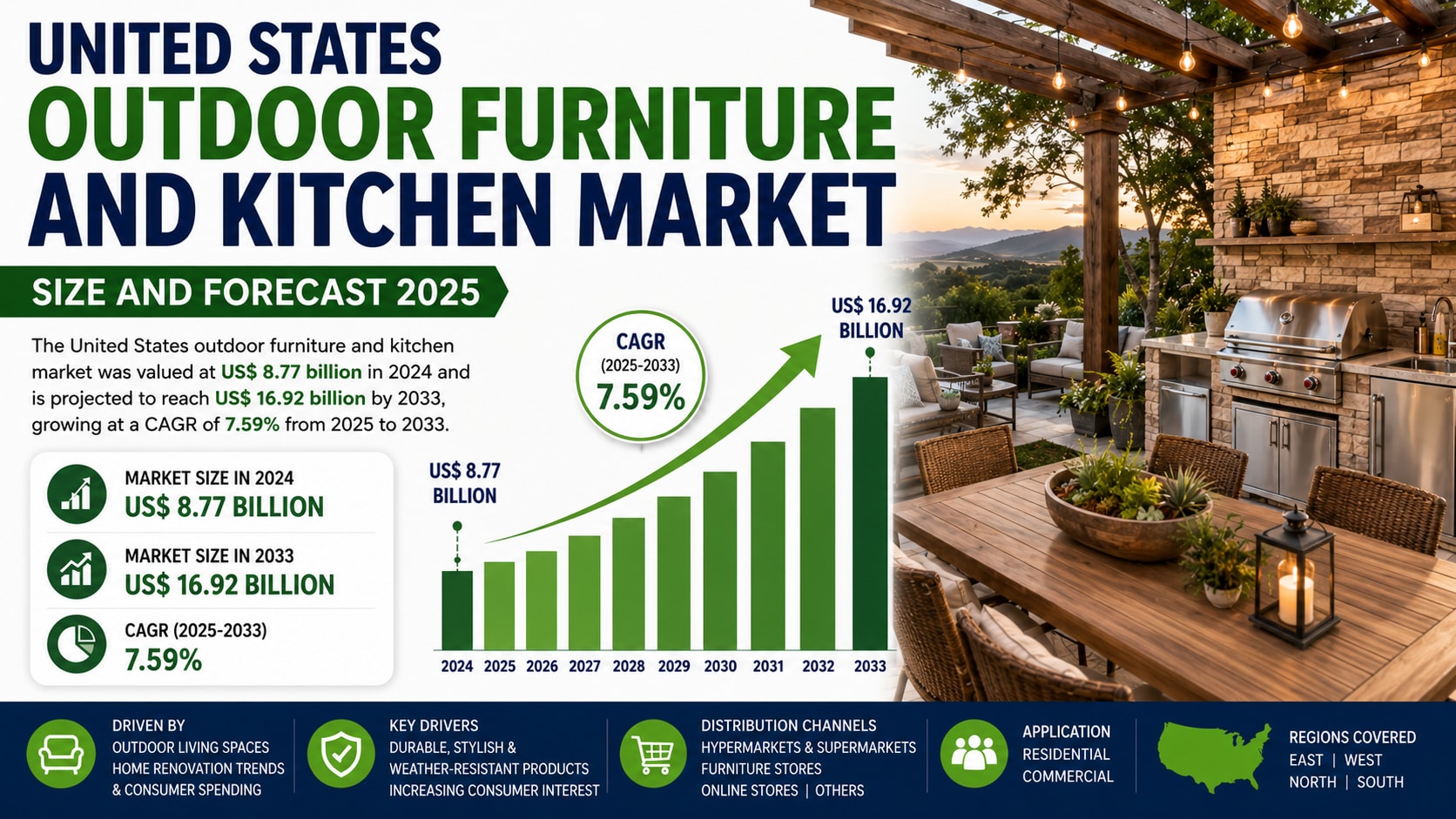
According to Renub Research, the United States outdoor furniture and kitchen market was valued at US$ 8.77 billion in 2024 and is expected to reach approximately US$ 16.92 billion by 2033, growing at a CAGR of 7.59% from 2025 to 2033.
This impressive growth reflects more than just rising furniture sales. It represents a cultural shift in how people view their homes, their lifestyles, and the importance of personal outdoor spaces.
Why Outdoor Living Is Becoming More Popular
For many homeowners, outdoor areas are no longer secondary spaces used only during summer gatherings. Instead, they are becoming everyday living environments designed for relaxation, socializing, dining, and even working remotely.
The increasing popularity of home improvement projects has significantly contributed to this trend. Americans are spending more time and money creating personalized outdoor experiences that combine beauty, comfort, and functionality.
Backyards are now being transformed into entertainment zones complete with dining tables, lounge seating, outdoor televisions, bars, and smart lighting systems. Even smaller balconies and rooftop spaces are being redesigned into peaceful retreats with compact furniture and decorative accents.
Consumers are also prioritizing emotional comfort and wellness. Outdoor spaces provide a sense of relaxation that many people crave in today’s fast-paced digital lifestyle. Comfortable outdoor seating, natural surroundings, and open-air dining create environments where families can reconnect and individuals can unwind after long workdays.
This emotional connection has become one of the strongest drivers behind the outdoor furniture and kitchen market.
Download Free Sample Report
The Impact of Remote Work and Home-Centered Lifestyles
Remote work played a major role in accelerating outdoor living trends across the United States.
As millions of people began spending more time at home, homeowners started looking for ways to maximize their available space. Outdoor areas became ideal locations for relaxation, virtual meetings, exercise, and family activities.
People realized that investing in outdoor comfort could significantly improve daily life.
Instead of spending money on expensive vacations or outside entertainment, many consumers redirected their budgets toward home improvement projects. Outdoor kitchens, luxury seating sets, pergolas, and weather-resistant furniture quickly became desirable lifestyle investments.
This shift also influenced consumer priorities. Buyers began searching for furniture that offered durability, multifunctionality, and premium aesthetics. Outdoor furniture was no longer viewed as temporary or seasonal. It became a permanent extension of the home.
Outdoor Kitchens Are Redefining Backyard Entertainment
One of the fastest-growing segments in the market is outdoor kitchens.
Traditional backyard grilling has evolved into fully equipped culinary spaces featuring built-in grills, refrigerators, sinks, cabinets, pizza ovens, smokers, and preparation counters. These kitchens are designed to deliver restaurant-style cooking experiences without leaving home.
Families are increasingly using outdoor kitchens for social gatherings, weekend parties, and holiday celebrations. Cooking outdoors creates a more interactive and entertaining experience compared to traditional indoor dining.
Modern outdoor kitchens are also becoming more luxurious and technologically advanced.
Smart grills with app-controlled temperature settings, automated lighting systems, and weather-resistant appliances are gaining popularity among homeowners who want convenience alongside premium design.
The demand for modular outdoor kitchen systems is also increasing because consumers prefer flexible layouts that can be customized according to available space and lifestyle preferences.
As outdoor entertaining continues to grow, outdoor kitchens are expected to remain a major contributor to market expansion.
Social Media and Design Trends Are Influencing Consumer Choices
Social media platforms such as Instagram and Pinterest have significantly influenced outdoor furniture trends.
Consumers are constantly exposed to images of luxurious patios, stylish poolside lounges, rooftop gardens, and modern outdoor kitchens. These aspirational visuals inspire homeowners to recreate similar spaces in their own homes.
As a result, outdoor design has become just as important as indoor décor.
Neutral color palettes, natural textures, minimalist layouts, woven furniture, and resort-inspired aesthetics are currently dominating the market. Consumers want outdoor furniture that looks elegant while remaining practical and weather-resistant.
The idea of blending indoor comfort with outdoor functionality has become one of the industry’s most powerful design philosophies.
Manufacturers are responding by introducing plush seating, modular sectionals, ergonomic chairs, and multifunctional furniture designed to create cozy and sophisticated outdoor experiences.
Sustainability Is Reshaping the Industry
Environmental awareness is playing a major role in shaping purchasing decisions across the outdoor furniture market.
Modern consumers are becoming more conscious about the materials used in furniture production and the environmental impact associated with manufacturing processes.
As a result, eco-friendly outdoor furniture is gaining strong popularity.
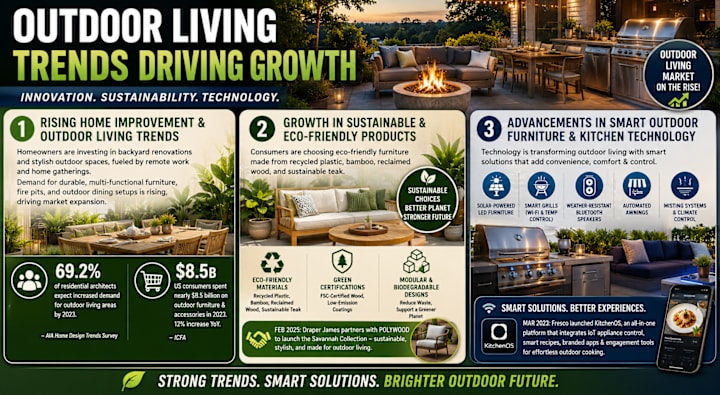
Manufacturers are increasingly using recycled plastic, reclaimed wood, bamboo, and responsibly sourced teak to meet growing demand for sustainable products. Consumers are also showing interest in furniture that offers long-term durability because long-lasting products are viewed as more environmentally responsible.
Sustainability has now become a competitive advantage for many brands.
Companies that promote eco-friendly production methods and recyclable materials are attracting environmentally conscious buyers, particularly younger consumers who prioritize ethical purchasing decisions.
Interestingly, consumers no longer view sustainability and luxury as separate concepts. Today’s buyers expect products to deliver premium aesthetics while also supporting environmental responsibility.
This expectation is pushing companies to innovate in both design and material development.
Smart Technology Is Entering Outdoor Spaces
Technology is rapidly transforming outdoor living experiences.
Smart outdoor furniture and connected kitchen appliances are becoming increasingly common as consumers seek convenience and enhanced functionality.
Outdoor grills with Wi-Fi connectivity allow users to monitor cooking temperatures directly from smartphone apps. Automated awnings adjust according to weather conditions, while solar-powered lighting systems improve energy efficiency.
Bluetooth-enabled speakers, smart cooling systems, and app-controlled outdoor appliances are also gaining popularity.
Technology integration is particularly important for younger homeowners who prefer connected living environments.
Consumers want outdoor spaces that feel modern, interactive, and technologically advanced. As a result, manufacturers are focusing heavily on innovation to remain competitive in a rapidly evolving market.
The rise of smart outdoor solutions is expected to play a major role in future market growth.
Residential Consumers Continue to Drive Demand
The residential sector remains the largest contributor to the outdoor furniture and kitchen market.
Homeowners across suburban and urban areas are investing in outdoor upgrades that improve both lifestyle quality and property value. Patios, decks, balconies, and gardens are increasingly being treated as functional living spaces rather than decorative additions.
Many real estate developers are also incorporating outdoor kitchens, lounge areas, and fire pits into residential projects because buyers now consider these features highly desirable.
Compact and multifunctional outdoor furniture is becoming especially popular in urban areas where outdoor space is limited.
Foldable tables, modular seating systems, and lightweight furniture designs allow homeowners to maximize smaller patios and balconies without sacrificing style or comfort.
This flexibility is helping outdoor living trends expand beyond luxury homes and into mainstream residential markets.
Commercial Businesses Are Expanding Outdoor Spaces
Restaurants, hotels, resorts, and cafés are also contributing significantly to market growth.
Businesses are investing heavily in outdoor dining areas and entertainment spaces to attract customers seeking open-air experiences. Outdoor seating has become increasingly important within the hospitality industry, especially as consumers continue to prefer relaxed and spacious dining environments.
Hotels and resorts are upgrading poolside lounges, rooftop bars, and outdoor relaxation areas to improve guest experiences.
Commercial buyers prioritize durability, weather resistance, and low maintenance because furniture used in public spaces experiences heavy daily usage.
This demand has encouraged manufacturers to develop stronger materials, corrosion-resistant metals, UV-protected fabrics, and easy-to-clean surfaces capable of maintaining visual appeal over time.
The commercial sector is expected to remain an important growth area for the outdoor furniture and kitchen industry.
The Growing Influence of Online Shopping
E-commerce has transformed the way consumers purchase outdoor furniture.
Online platforms now offer thousands of product options, allowing customers to compare designs, materials, prices, and reviews from the comfort of their homes.
Augmented reality tools and virtual previews have also improved online shopping experiences by helping consumers visualize how furniture will appear in their outdoor spaces.
Direct-to-consumer brands are becoming increasingly popular because they reduce retail overhead costs and offer competitive pricing.
Despite the growth of online shopping, physical showrooms still play an important role in the market.
Many customers prefer seeing and testing furniture in person before making major purchases. Comfort, texture, durability, and visual appearance are often easier to evaluate through direct interaction.
As a result, successful retailers are adopting hybrid business models that combine online convenience with in-store experiences.
Regional Trends Across the United States
Outdoor living preferences vary significantly across different regions of the United States.
In the Eastern United States, consumers often prioritize weather-resistant materials capable of handling changing climate conditions. Coastal areas frequently prefer corrosion-resistant furniture made from aluminum and teak.
Urban areas such as New York and Boston show strong demand for compact outdoor solutions designed for smaller spaces.
Meanwhile, the Western United States continues to lead outdoor lifestyle trends due to warmer climates and year-round outdoor activity.
States like California and Arizona have strong demand for luxury outdoor kitchens, entertainment patios, and resort-style furniture. Sustainability and minimalist aesthetics are also particularly popular in western markets.
These regional differences encourage companies to diversify their product offerings and marketing strategies according to local consumer preferences.
Challenges Facing the Outdoor Furniture Industry
Despite strong growth projections, the industry still faces several important challenges.
One major issue is the high cost of premium outdoor furniture and kitchen systems. Products made from high-quality materials such as stainless steel, teak, and wrought iron can be expensive for average consumers.
Smart features and weather-resistant technologies also increase manufacturing costs.
Seasonality presents another challenge because demand often peaks during warmer months and declines during colder seasons. Extreme weather conditions such as hurricanes, heavy snowfall, and heatwaves can also impact consumer purchasing behavior.
Additionally, shipping large furniture products remains expensive, creating logistical and supply chain difficulties for manufacturers and retailers.
However, industry experts remain optimistic because long-term consumer demand for outdoor living continues to strengthen.
The Future of Outdoor Living in America
The future of the United States outdoor furniture and kitchen market looks highly promising.
Consumers are expected to continue prioritizing home-centered lifestyles, wellness, comfort, and personalized living experiences. Outdoor spaces will likely become even more integrated into everyday life as technology, sustainability, and design innovation continue evolving.
Manufacturers are expected to focus on smart functionality, modular systems, eco-friendly materials, and customizable outdoor solutions capable of meeting changing consumer expectations.
Outdoor living is no longer considered a luxury reserved for high-end homes. It is becoming a mainstream lifestyle movement embraced by homeowners across different income levels and property sizes.
Whether it is a small urban balcony or a large suburban backyard, Americans increasingly view outdoor spaces as essential extensions of the home.
Final Thoughts
The rapid growth of the United States outdoor furniture and kitchen market reflects much more than changing design preferences.
It highlights a major cultural transformation centered around comfort, lifestyle enhancement, wellness, and social connection.
Consumers are investing in outdoor spaces because they want environments that improve daily living experiences while creating opportunities for relaxation and entertainment.
With Renub Research forecasting the market to nearly double in value by 2033, the industry is entering a powerful growth phase driven by innovation, sustainability, smart technology, and evolving consumer lifestyles.