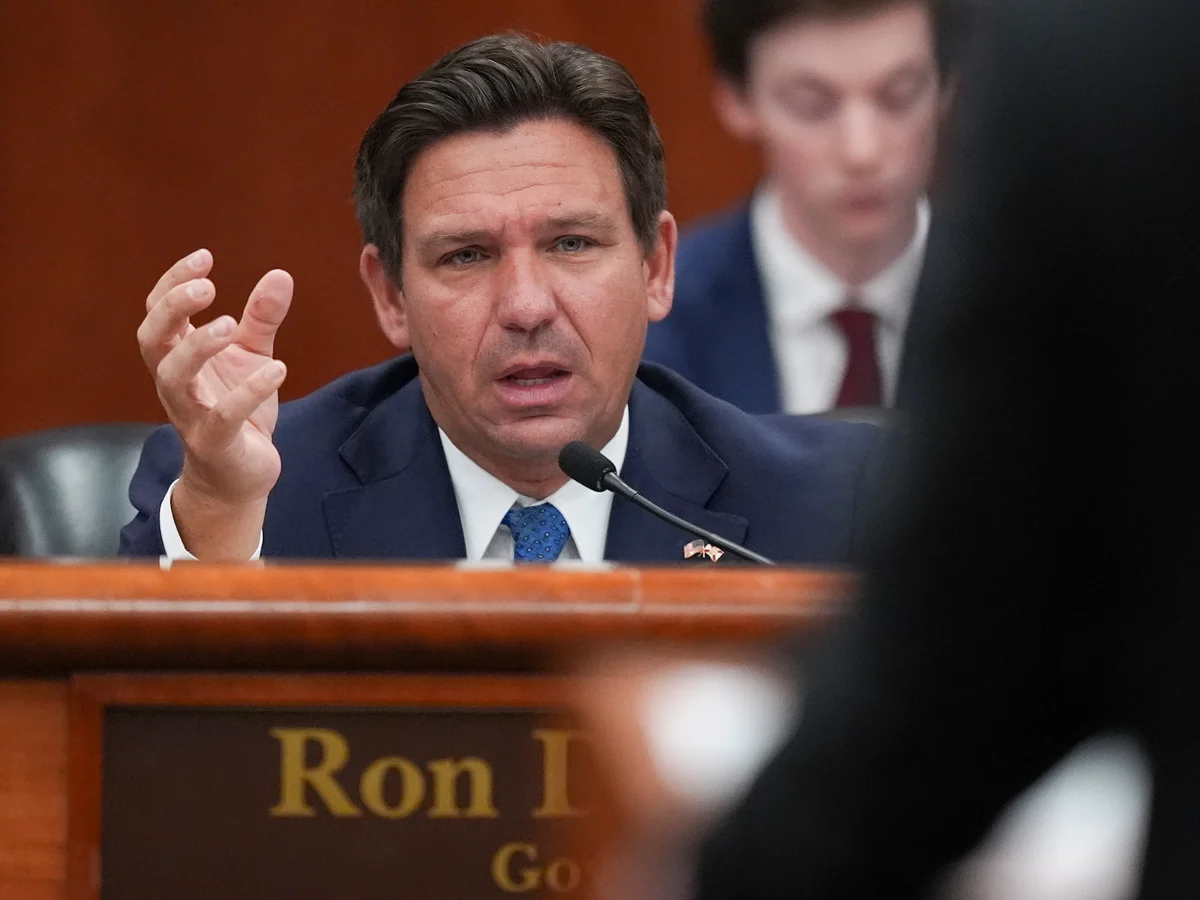
The House still does not want to pony up extra taxpayer funding to pay for outgoing Gov. Ron DeSantis and his family’s security after his term is up.
In its latest budget offer out Friday night, the House remains against funding DeSantis’ security in his first year of being a a private citizen.
This opposition holds firm even as the lower chamber has lessened its stance against other initiatives.
For instance, the House offered some funding for the Florida State Guard and proposed $40 million for Florida Job Growth Fund although the House wants some strings attached.
The Senate has been pushing for Florida Department of Law Enforcement (FDLE) to cover the DeSantis family security for 12 months after DeSantis’ term expires.

DeSantis-appointed Chief Financial Officer Blaise Ingoglia is advocating that DeSantis deserves get the extra security to stay safe.
“I am absolutely 100% in favor of that in this heightened environment where you have political violence occurring,” Ingoglia said this week. “I think it is incumbent upon us to protect them.”
The Orlando Sentinel later published a story about Ingoglia receiving his own security detail at sporting events around the state.
DeSantis, meanwhile, said he stands back and let FDLE handle his security and isn’t sure what it would look like after he leaves office.
“How that would work, you know, going forward, I have no idea,” DeSantis said. “Since I’ve been Governor, I’ve kind of let them make the call on that. And if they believe that there’s threats, then we take that very, very seriously.”

Funding DeSantis’ security is one of the ongoing issues as leadership hashes out the spending plan over the Memorial Day weekend.
Leaders say they can still finish the budget before the end of May, but it could be close. A budget memo from House Speaker Daniel Perez has House Budget Chair Lawrence McClure and Hooper meeting at 8 a.m. Tuesday to hold talks “until completion.”
If the budget hits desks that day, it starts the constitutionally required 72-hour cooling-off period, teeing up a House floor vote Friday, May 29, with the Senate to follow before Sine Die — with a month to spare before the July 1 start of the fiscal year.
This is the second straight year of a drawn-out budget; last year’s wasn’t passed until June 16.