The power of trees to bring solace
While reading Miles Howard’s piece “Why aren’t there more COVID-19 memorials?” (Ideas, May 17), I was reminded of a project in Newton that honored lives lost to Covid in our community in 2021. Known as Green Newton’s 4C Tree Project (Capture Carbon Commemorate Covid), the group successfully raised more than $50,000 in funds to purchase over 230 native trees to honor lives lost to Covid in our community.
The initiative was proposed by a college student, Elizabeth Sockwell, who enlisted a team of volunteers to raise funds and collaborate with Newton’s director of urban forestry, Marc Welch, on planting the trees in more than 25 locations, including public school grounds and in local parks. These trees will not only capture carbon for future generations, they will bring solace to members of our community for many years to come. How wonderful it would be if native trees could be planted as memorials in other communities to honor those we lost to Covid.
Marcia Cooper
Waban
We need accountability as well as remembering
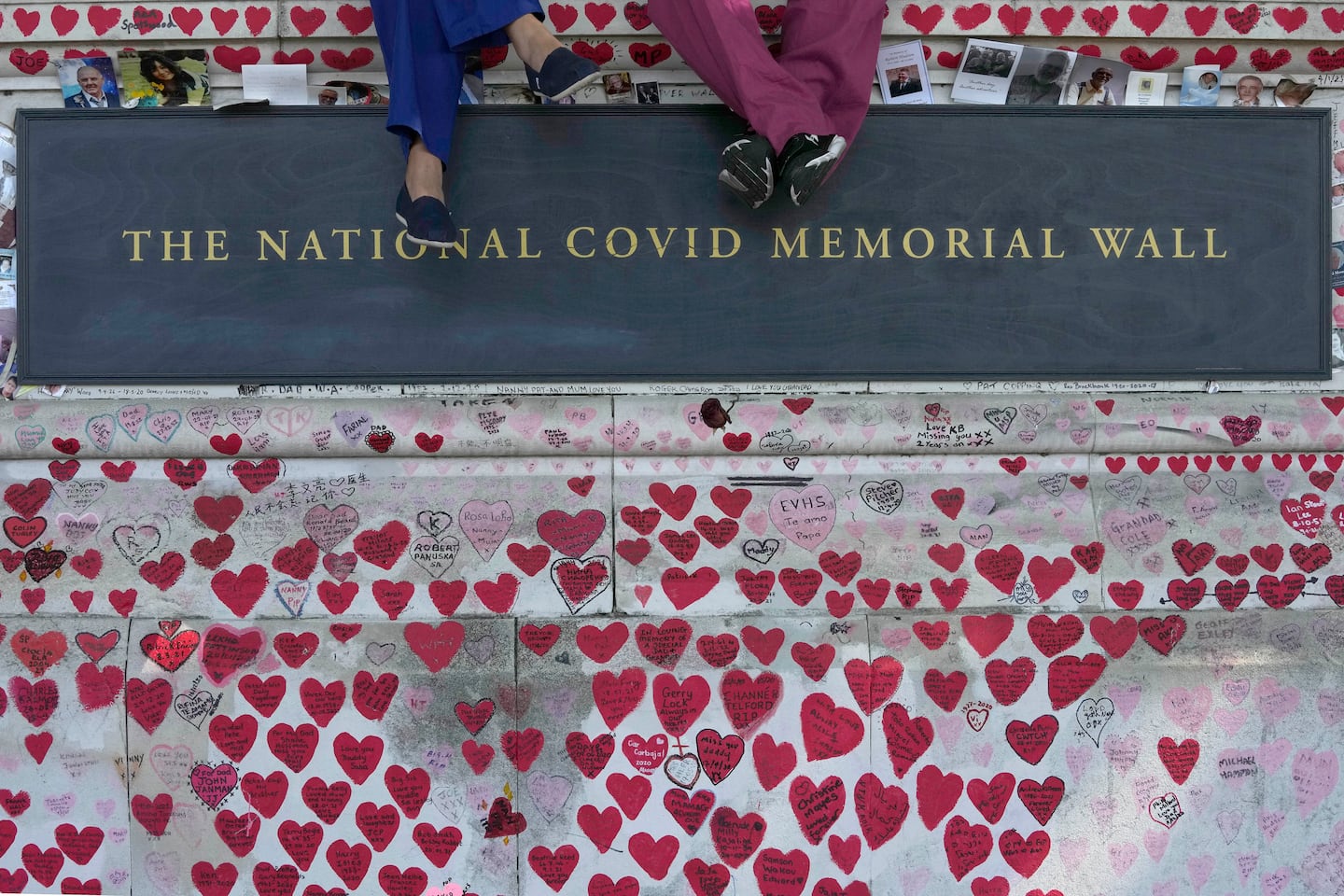
Commemorating the COVID-19 dead should do more than give grief a place to go, as important as that is. A monument should also give outrage and activism a place to create hope for systemic change.
No administration will choose to provide a monument to the most vulnerable — the residents of nursing facilities in 2020 who caught Covid and died — until it it is forced by public pressure to admit what the Centers for Medicare and Medicaid Services, Department of Health and Human Services, Congress, and President Trump did wrong in that perilous year.
Those nursing home residents who died of the virus were abandoned by the Trump administration. They died prematurely and unnecessarily. Belatedly, President Joe Biden tried to mandate higher staffing levels in nursing homes, a requisite for systemic change. The current Trump administration undid it immediately.
Margaret Morganroth Gullette
Newton
A crack in our lives, repaired
I would like to thank Miles Howard for mentioning the COVID-19 memorial I created along with city planners of Newburyport. Howard is right to observe the circling community of fish relate to the water the memorial resides by. An aspect of the memorial he didn’t mention is the carved Kintsugi crack that runs across the memorial’s surface. It speaks of the damage Covid caused. It recognizes the lost lives. It implies healing but with scars of the epidemic. It is meant to be open ended.
Michael Updike
Newbury
Memorials also carry light forward
From 2020 through 2023, more than 25,000 Massachusetts residents died from COVID-19. Others died during that time — a period which was marked by fear, isolation, restricted visitation, overwhelmed hospitals, and disrupted funerals and memorial services. Families were often unable to gather to comfort each other or grieve together.
To address the need for a memorial, Dignity Alliance Massachusetts created “Remembering with Dignity,” a virtual memorial honoring those who died during the pandemic — whether from Covid or from other causes during that painful time. The memorial invites families and friends to submit stories and photos so that these lives are not forgotten.
As Howard notes, remembrance is not simply about looking back; it is about carrying light forward. In the absence of a national monument or formal day of remembrance, community memorials matter. Every life lost deserves to be remembered with dignity.
Debbie Coogan
Dignity Alliance Massachusetts
Newton Centre