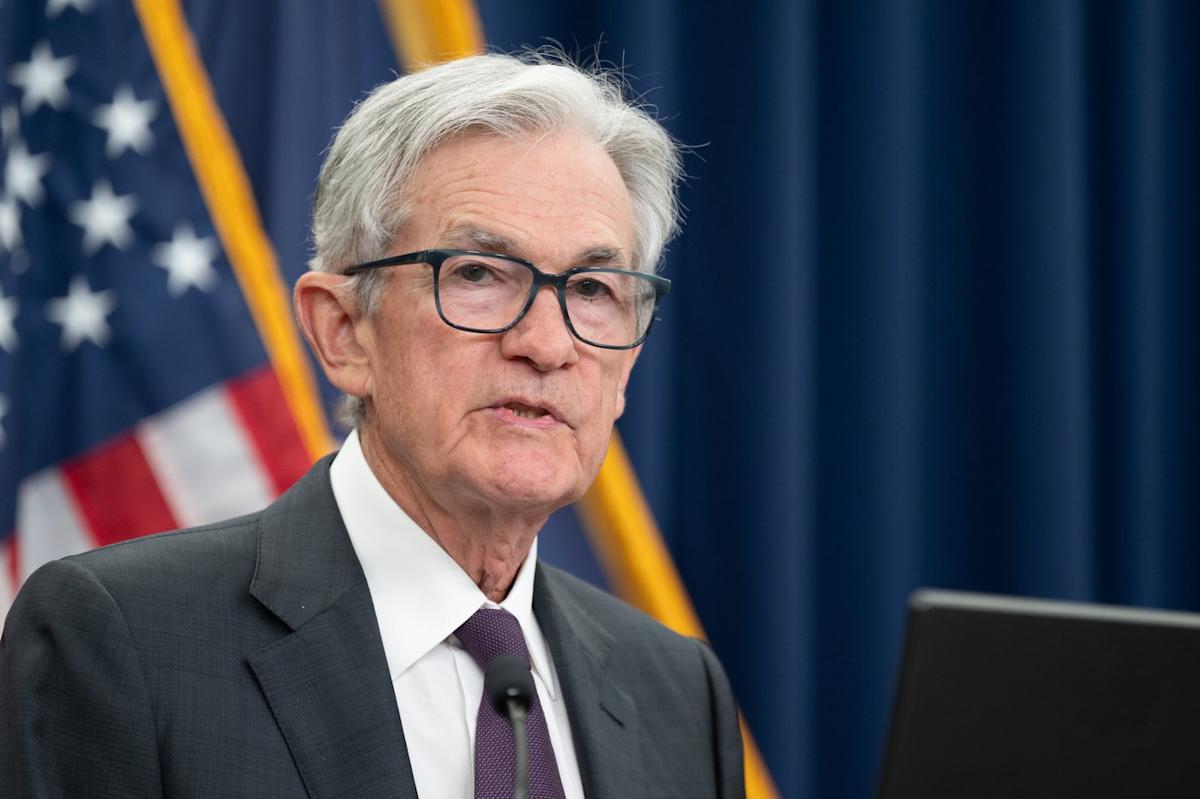
Although Jerome Powell is no longer Fed chair (he still serves on the Board of Governors), his final Federal Open Market Committee (FOMC) meeting on April 29 was a doozy that may end up roiling the Dow Jones Industrial Average (DJINDICES: ^DJI), S&P 500 (SNPINDEX: ^GSPC), and Nasdaq Composite (NASDAQINDEX: ^IXIC).
Over the last 48 years, no Fed chair has had a lower dissent rate per meeting than Powell. Yet, the outgoing head of the Fed’s last meeting in charge was marked by a historic four dissents — the highest number since 1992. Stephen Miran favored a quarter-point cut to the federal funds target rate, while Beth Hammack, Neel Kashkari, and Lorie Logan didn’t support the inclusion of an easing bias statement by the FOMC.
|
Will AI create the world’s first trillionaire? Our team just released a report on a little-known company, called an “Indispensable Monopoly,” providing the critical technology Nvidia and Intel both need. |

Following the release of the Fed minutes from the April meeting (i.e., a detailed record of the debates and insights from policymakers behind closed doors), we learned that this dissent may be far greater than the FOMC statement on April 29 led on.
Did the FOMC just signal a major upcoming shift in monetary policy?
The Fed minutes primarily paint a picture of patience, with policymakers preaching a wait-and-see approach. Given the persistent price stickiness of President Trump’s tariffs on the goods sector and the energy price shock associated with the Iran war, the 12-person body responsible for setting the nation’s monetary policy doesn’t want to jump the gun.
But in the section that detailed FOMC participants’ views on current conditions and the economic outlook, a different story emerged. As stated in the Fed minutes:
A majority of participants highlighted, however, that some policy firming would likely become appropriate if inflation were to continue to run persistently above two percent. To address this possibility, many participants indicated that they would have preferred removing the language from the postmeeting statement that suggested an easing bias regarding the likely direction of the Committee’s future interest rate decisions.
That doesn’t say three participants disagreed with the easing bias statement. It says “many,” implying a likely shift to a neutral bias, perhaps as soon as the June meeting.
The Fed minutes also make clear that rate hikes are on the table in the event that inflation continues to climb or remains well above 2%. As the inflationary effects of the Iran move begin to move beyond the energy sector, another surge in prices is likely.