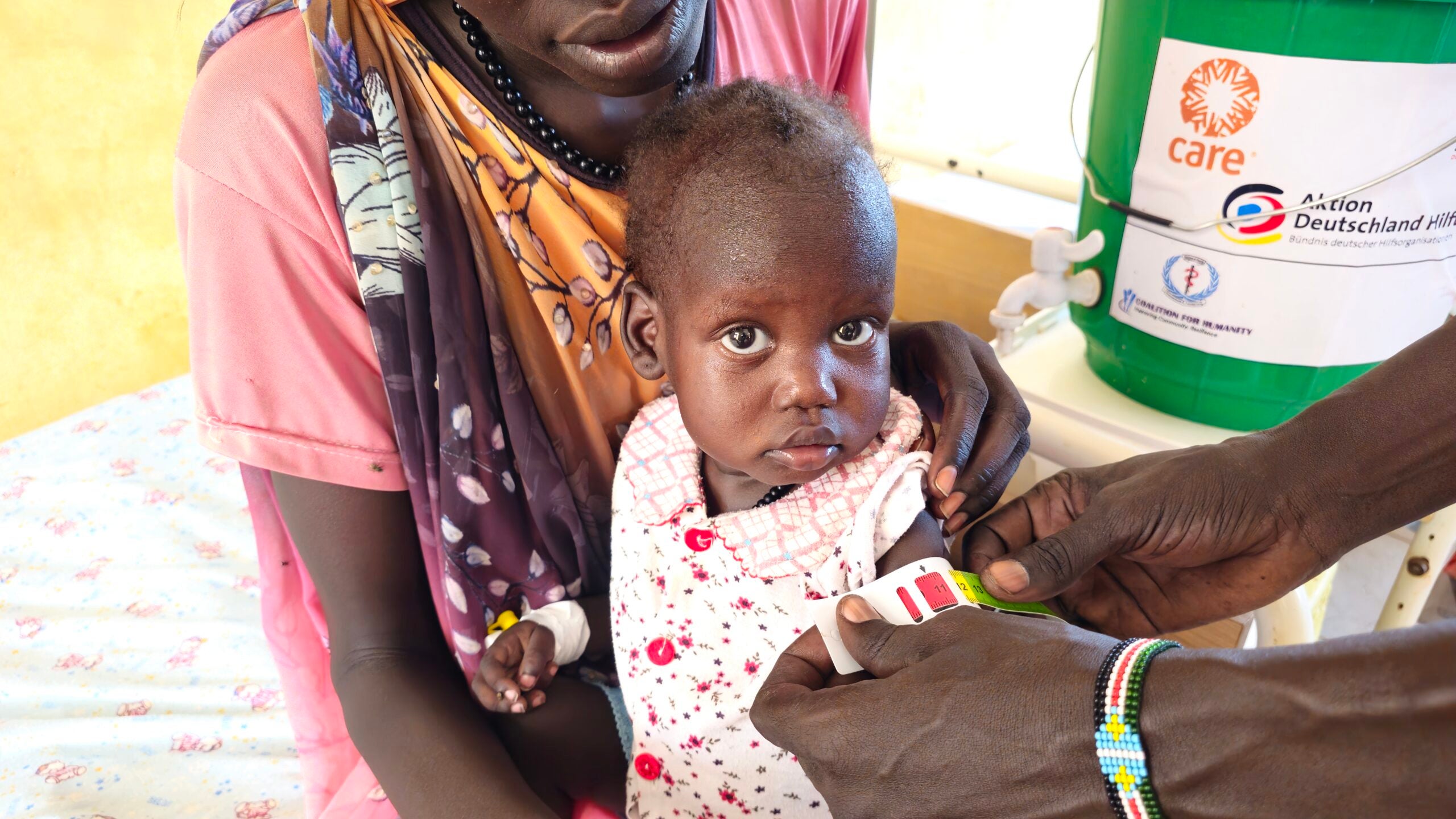
The same crisis looks different from place to place.
In Pariang and Jamjang, CARE staff continue to treat children for severe acute malnutrition. But in Akobo County, which the IPC has identified as at risk of famine, all 15 health facilities have been destroyed by conflict, leaving families with little access to care as hunger and disease rise.
The damage extends beyond one hospital. Across Jonglei State, health partners estimate that about 1.35 million people have lost access to essential health services because of damaged, looted, or disrupted facilities.
During a recent assessment of Akobo County Hospital — the county’s only referral facility — CARE South Sudan Humanitarian Manager Chandiga Kennedy saw the scale of the destruction after CARE staff and partners returned to the area following weeks of evacuation due to violence..
“When I walked into Akobo Hospital, it had been stripped of everything, beds gone, supplies looted,” Kennedy says. “It was a devastating sight,”
“Patients who had returned were lying on the cold floor waiting to be treated: some weak, some in pain, all waiting for care,” she continues. “It was heartbreaking, yet you could still see people’s determination to return to what they know and begin rebuilding their lives, despite everything they have endured.”
CARE and local partners continue supporting communities through food assistance, nutrition services, healthcare, water, sanitation, and other emergency response efforts where access allows. But insecurity, access constraints, and severe funding shortfalls are limiting the scale of the response.
“You cannot treat hunger without functioning health services,” says Akai. “Therapeutic food means very little if there are no clinics, no trained staff, no medicines and no safe access. If the health system continues to collapse, lives will be lost not only from lack of food, but from entirely preventable and treatable conditions.”
Across South Sudan, families are still making the journey to seek care. But as conflict, funding shortages, and damaged health facilities continue to strain the health system, reaching treatment does not always guarantee it will be available.
For children facing severe malnutrition, that uncertainty can become deadly.