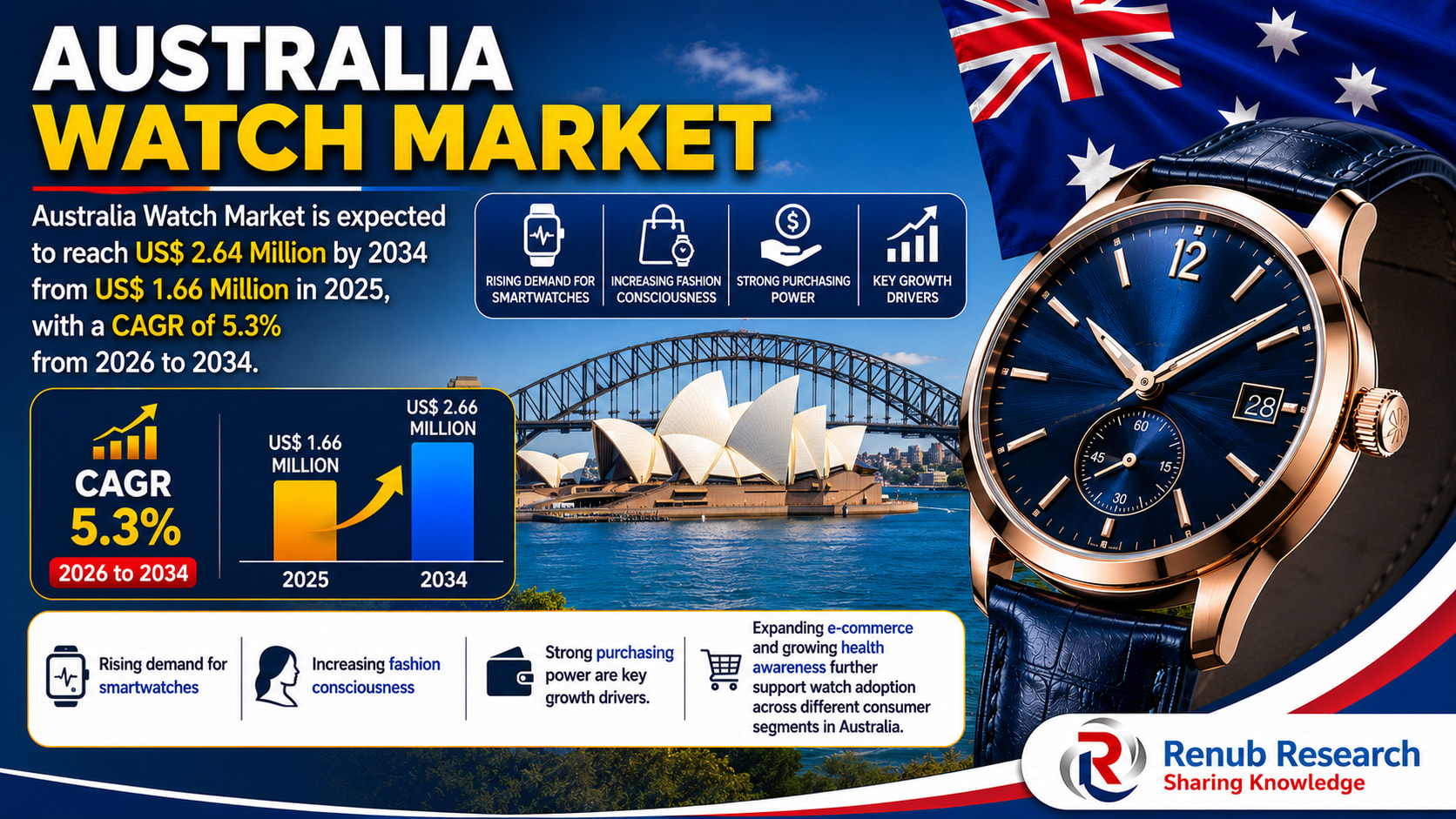
The Australia watch market is steadily evolving as consumers increasingly view watches as both fashion accessories and multifunctional wearable devices. From premium analog timepieces and designer collections to advanced smartwatches with health-tracking capabilities, the industry is experiencing rapid transformation alongside changing lifestyle preferences and growing digital adoption.
According to Renub Research, the Australia watch market is projected to grow from US$ 1.66 million in 2025 to US$ 2.64 million by 2034, expanding at a CAGR of 5.3% between 2026 and 2034. Rising demand for smartwatches, increasing fashion consciousness, strong purchasing power, and growing health awareness are expected to continue driving long-term market growth throughout Australia.
Modern watches today serve multiple purposes beyond simple timekeeping. Traditional watches continue functioning as fashion statements and status symbols, while smartwatches increasingly support fitness monitoring, digital connectivity, and wellness management.
As wearable technology and premium lifestyle consumption continue expanding, Australia’s watch market is entering a new phase of innovation and consumer diversification.
Smartwatch Adoption Continues Accelerating Across Australia
One of the biggest growth drivers behind the Australia watch market is the rapid adoption of smartwatches and wearable technology.
Consumers increasingly seek devices that combine convenience, health tracking, and smartphone integration into a single product. Smartwatches are now widely used for:
- Fitness tracking
- Heart-rate monitoring
- Sleep analysis
- Activity management
- Notifications and connectivity
- Wellness monitoring
This trend is particularly strong among younger and technology-oriented consumers who value multifunctionality and digital integration.
Wearable devices are increasingly viewed as essential lifestyle tools that help users manage daily routines, maintain fitness goals, and stay connected.
Manufacturers continue expanding smartwatch offerings across multiple price categories, improving accessibility for mainstream consumers while also introducing premium models with advanced capabilities.
The ongoing evolution of wearable technology is expected to remain one of the strongest contributors to market growth throughout the forecast period.
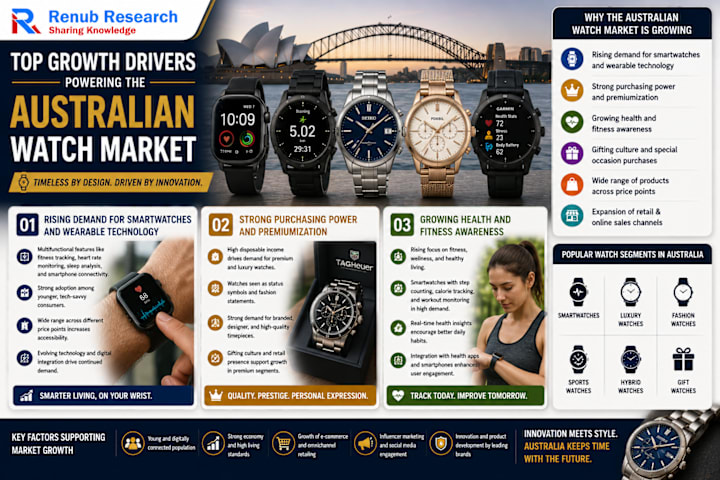
Rising Health and Fitness Awareness Is Driving Wearable Demand
Australia’s growing focus on health and wellness is significantly influencing watch purchasing behavior.
Consumers increasingly prioritize preventive health monitoring and fitness-oriented lifestyles, leading to stronger demand for wearable devices equipped with advanced health-tracking features.
Smartwatches offering features such as:
- Step counting
- Calorie tracking
- Workout monitoring
- Heart-rate analysis
- Sleep monitoring
- Activity reminders
have become especially popular among fitness enthusiasts and wellness-conscious consumers.
The integration of smartphone apps and health ecosystems further enhances user engagement and functionality.
Australia’s active outdoor culture also supports strong demand for wearable devices suited to sports, fitness routines, and everyday activity management.
As preventive healthcare and digital wellness continue gaining importance, demand for technologically advanced watches is expected to remain strong across both urban and regional markets.
Strong Purchasing Power Supports Premium Watch Demand
Australia’s relatively high disposable income levels continue supporting demand for premium and luxury watches.
Consumers increasingly view watches as lifestyle accessories and status-oriented fashion products rather than purely practical devices.
Luxury and branded watches remain highly desirable for:
Professional settings
Formal occasions
Personal collections
Fashion styling
Gifting purposes
Consumers often seek products that combine:
- Durability
- Brand prestige
- Premium craftsmanship
- Stylish aesthetics
- Long-term value
The gifting culture surrounding birthdays, anniversaries, and corporate occasions also contributes significantly to premium watch sales.
Retail environments such as luxury boutiques, shopping centers, and branded outlets continue playing important roles in strengthening visibility for premium watch categories.
As Australian consumers increasingly prioritize quality and lifestyle-oriented products, the premium watch segment is expected to maintain stable growth.
Fashion Consciousness Continues Influencing Consumer Preferences
Fashion and personal style remain important drivers within Australia’s watch industry.
Consumers increasingly use watches to complement outfits, express individuality, and enhance overall lifestyle aesthetics.
Younger consumers particularly seek products featuring:
- Minimalist designs
- Sleek aesthetics
- Versatile styling
- Premium materials
- Lifestyle branding
Social media trends, influencer marketing, and celebrity culture continue shaping purchasing decisions across multiple demographics.
Traditional analog watches remain highly relevant among consumers who appreciate craftsmanship and timeless design, while smartwatches appeal strongly to those prioritizing functionality and modern convenience.
Manufacturers increasingly combine style with functionality to broaden appeal across both fashion-conscious and technology-oriented audiences.
E-Commerce Expansion Is Transforming the Industry
The rapid growth of e-commerce has significantly changed how watches are marketed and sold throughout Australia.
Consumers increasingly prefer online shopping because it allows them to:
- Compare pricing
- Explore global brands
- Read customer reviews
- Access wider product selections
- Receive personalized recommendations
- Shop conveniently from home
Digital retail channels have improved accessibility across both metropolitan and regional areas.
Brands increasingly rely on omnichannel strategies that integrate online convenience with physical retail experiences.
Direct-to-consumer sales models are also becoming more important, allowing companies to strengthen customer engagement and improve brand visibility.
At the same time, physical retail stores remain highly relevant for luxury and premium purchases where consumers often prefer in-person product evaluations and personalized service.
The combination of digital and traditional retail channels is creating a highly competitive and dynamic market environment.
Intense Competition Continues Challenging Brands
Despite strong growth opportunities, the Australia watch market remains highly competitive.
Both domestic and international brands compete aggressively across multiple categories and price segments.
Consumers now have access to a broad variety of:
- Luxury watches
- Smartwatches
- Fashion-oriented products
- Affordable digital models
- Premium analog collections
This crowded market environment creates significant pressure on pricing, marketing, and product differentiation.
Smartwatch manufacturers have intensified competition further by rapidly introducing new technologies and updated models.
To remain competitive, companies must continuously invest in:
- Product innovation
- Branding campaigns
- Technology integration
- Design improvements
- Influencer partnerships
- Customer engagement strategies
Smaller players often face difficulties establishing strong market visibility against globally recognized brands.
Rapid Technological Obsolescence Creates Industry Pressure
Rapid technological advancement presents another major challenge within the Australian watch market.
Smartwatch product lifecycles are becoming increasingly short as manufacturers frequently launch upgraded devices with improved functionality and performance.
This creates pressure around:
- Inventory management
- Research and development costs
- Product refresh cycles
- Consumer purchasing behavior
Consumers may delay purchases while anticipating newer product releases, affecting sales timing and inventory turnover.
Traditional watch segments also face growing pressure as consumers increasingly prioritize technologically advanced wearable devices over basic timekeeping products.
Manufacturers must therefore balance innovation speed with profitability and long-term product relevance.
New South Wales Leads the National Market
New South Wales remains the largest watch market in Australia due to the strong economic activity and large population centered around Sydney.
Consumers in the state strongly favor:
- Premium watches
- Branded products
- Smartwatches
- Fashion-oriented accessories
Luxury shopping destinations and advanced retail infrastructure continue supporting strong market growth.
The state’s high adoption of e-commerce also improves accessibility and product variety for consumers.
Victoria Benefits From Strong Fashion Culture
Victoria, particularly Melbourne, represents another major watch market due to its strong fashion culture and urban consumer base.
Consumers in Victoria often seek products that combine:
- Aesthetic appeal
- Functionality
- Premium styling
- Modern design trends
The presence of a large student population and working professionals supports demand across multiple price categories.
Queensland Drives Demand for Fitness-Oriented Devices
Queensland’s active outdoor lifestyle strongly supports demand for durable and fitness-focused smartwatches.
Consumers frequently prefer products featuring:
- Water resistance
- GPS tracking
- Activity monitoring
- Fitness integration
The state’s warm climate and emphasis on outdoor recreation continue accelerating wearable device adoption.
Western Australia Supports Premium and Durable Products
Western Australia’s affluent population and strong economic activity contribute significantly to premium watch demand.
Consumers often prioritize:
- Durability
- Reliability
- Premium craftsmanship
- Multifunctional features
The mining and resource sectors also influence demand for robust and high-performance watches suitable for demanding work environments.
Recent Industry Developments Highlight Market Expansion
Recent developments within Australia’s watch industry demonstrate growing international ambition and innovation.
In February 2025, Australian watch media company Time+Tide announced plans to secure £3 million in private funding to launch a retail outlet in New York following successful ventures in Melbourne and London.
The expansion highlights the increasing global influence of Australian watch-related businesses and lifestyle branding.
In February 2024, Habring² partnered with Define Watches to launch a limited-edition mono-pusher chronograph featuring a hand-wound movement and anti-magnetic escapement.
Such collaborations reflect growing interest in niche luxury craftsmanship and collector-oriented products.
Major Companies Continue Competing Through Innovation
Leading companies competing within the Australia watch market include:
- Seiko Holdings Corporation
- Casio Computer Co. Ltd
- Timex Group
- Rolex SA
- Compagnie Financière Richemont S.A
- The Swatch Group Ltd
- Citizen Watch Co. Ltd.
- Fossil Group Inc.
- Google LLC
Competition increasingly focuses on wearable technology, fashion aesthetics, digital integration, and premium lifestyle branding.
The Future of the Australia Watch Market
The future of the Australia watch market appears highly promising as wearable technology, health awareness, and premium lifestyle consumption continue expanding.
Smartwatch innovation, fitness integration, digital retail growth, and fashion-conscious consumer behavior are expected to remain major long-term market drivers.
At the same time, companies capable of balancing functionality, style, affordability, and technological innovation are likely to emerge as long-term market leaders.
As watches continue evolving into multifunctional lifestyle devices, Australia’s watch industry is expected to maintain steady growth through 2034.
Final Thoughts
The Australia watch market is evolving rapidly as consumers increasingly seek products that combine technology, fashion, wellness, and convenience. Watches are no longer viewed simply as timekeeping tools—they are becoming essential lifestyle accessories deeply integrated into health monitoring, digital connectivity, and personal expression.
Although intense competition and rapid technological change remain significant challenges, strong purchasing power, expanding e-commerce adoption, and rising health consciousness continue positioning the Australian watch industry for stable long-term growth