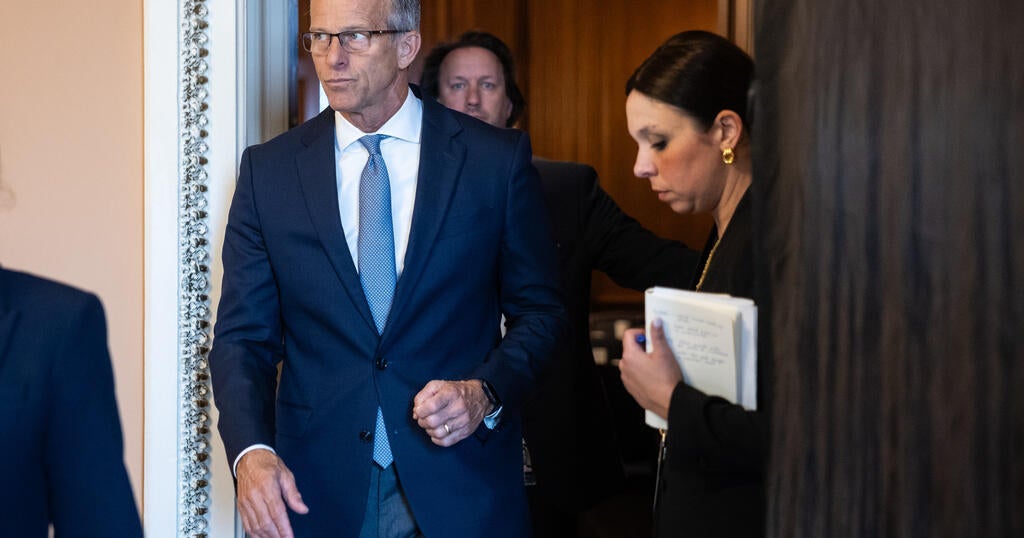
Some Republican senators openly expressed their concerns about the Justice Department’s new “anti-weaponization fund” in a tense meeting Thursday with Acting Attorney General Todd Blanche.
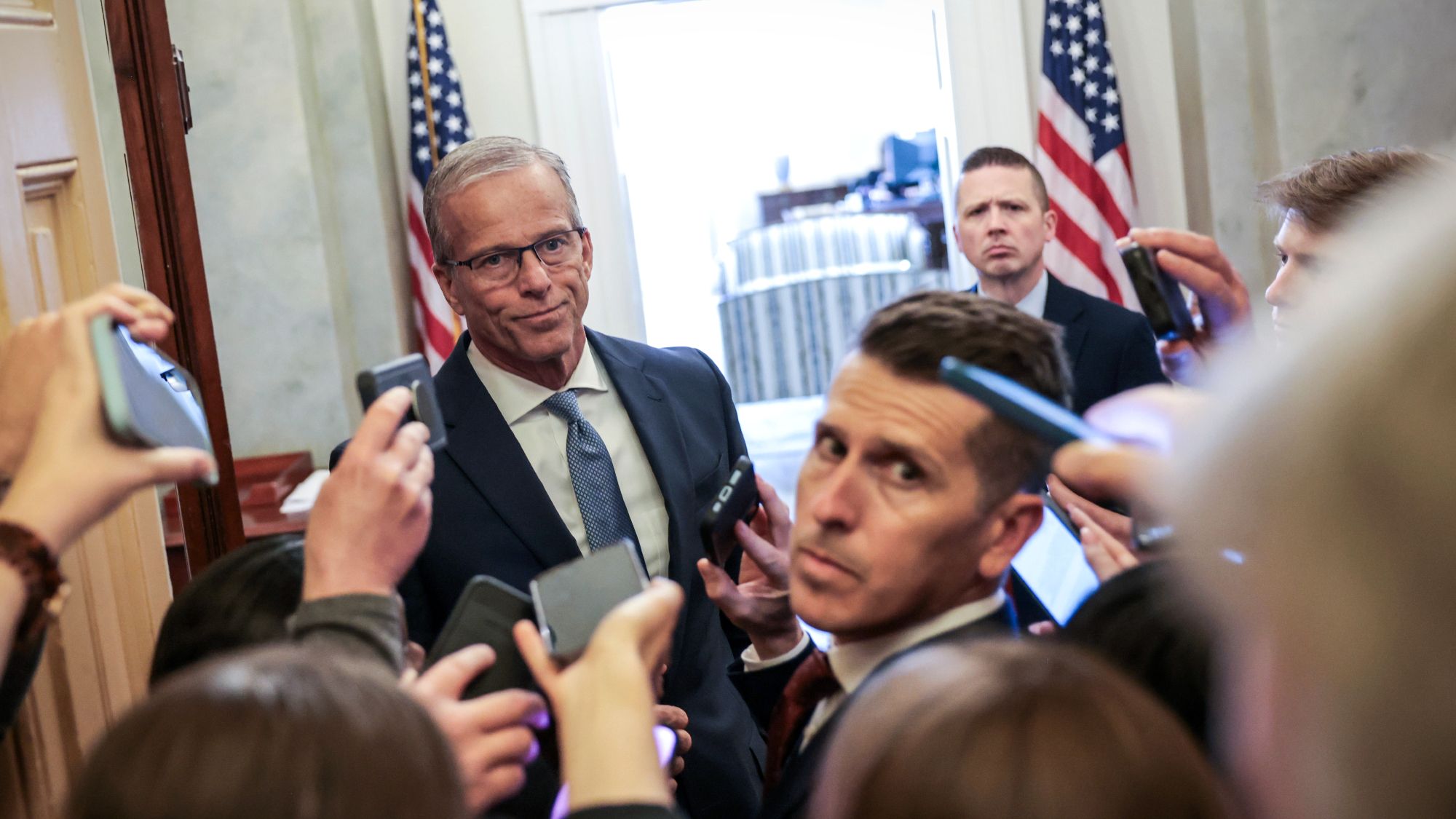
“You could call it a curveball right at the end, and nobody could hit it,” Alabama Sen. Tommy Tuberville told reporters after the meeting, in reference to the compensation fund.
Sources inside the meeting say Blanche did not provide adequate answers or clarity about the $1.776 billion Justice Department fund announced earlier this week, which will provide taxpayer-funded payouts to people who allege the legal system has been “weaponized” against them. It’s part of an agreement between President Trump and the federal government to settle his lawsuit against the IRS and Treasury Department over the leak of his tax returns.
There are major questions about how the fund will operate and who might receive payments from it. The Justice Department has said the fund will be administered by a commission of five people appointed by the attorney general, one of whom will be chosen “in consultation with congressional leadership,” and there will not be any partisan requirements to file claims. Some Trump allies and pardoned Jan. 6 defendants have said they may apply.
Critics have blasted the settlement agreement, with congressional Democrats casting it as a “slush fund,” which the Justice Department has pushed back on.
One GOP source who was in the room said the Trump administration dropped the news of the fund on lawmakers at the last minute — and with bad messaging. The source said the administration does not seem to grasp how poorly the public views it.
A senior Republican aide said that a bill to fund Border Patrol and Immigration and Customs Enforcement that the Senate was supposed to vote on Friday “would have been passed, if not for the actions of the administration. … Members were ready to vote until the DOJ anti-weaponization fund announcement.”
Now, Congress is going into recess until next month without passing the measure, which Mr. Trump had said he wanted to see on his desk by June 1. If voting had gone forward, it may have opened the floodgates for a number of uncomfortable amendments and votes related to the “anti-weaponization fund,” including on who would be eligible to receive payouts.
“I’m not going to get into the specific amendments,” Senate Minority Leader Chuck Schumer said of Democrats’ strategy to force votes on the reconciliation bill. “We felt that this corruption was so vile that we were going to do everything we can in reconciliation to try to get it undone.”
The GOP aide said after the meeting with Blanche that the Justice Department still has a lot of questions to answer. Republican senators are frustrated because the department “didn’t need to settle the case when they did and didn’t need to announce this fund. The administration needs to address member issues on this.”
Blanche was sent to the Hill to fix the problem his department caused, and didn’t fix it, the aide said.
In a statement Thursday, a Justice Department spokesperson said the meeting included “a healthy discussion on the settlement.”
“[Blanche] made clear that the Anti-Weaponization Fund announced Monday has nothing to do with reconciliation, indeed not a single dime from the money the President is seeking in reconciliation would go toward anything having to do with the Fund,” the spokesperson said. “We will continue to work with the Senate to get critical reconciliation funds approved.”
CBS News has reached out to the Justice Department for further comment on the meeting.
Tuberville told CBS News that Blanche told lawmakers during Thursday’s meeting that people who assaulted law enforcement would not be compensated under the “anti-weaponization fund.” Blanche did not rule out allowing payouts for Jan. 6 rioters convicted of attacking police when he testified before a Senate appropriations subcommittee earlier this week.
“We’re not going to reward people that attack policemen and people of authority,” said Tuberville, who generally supports the idea of the fund. “[Blanche] said that.”
GOP Sen. Susan Collins of Maine also told CBS News that she raised the issue with Blanche and he seemed to suggest people who assaulted law enforcement would not receive settlements from the fund. Still, she wants to see “language” and more clarity from the Justice Department.
Sen. Bill Cassidy, a Louisiana Republican who has become an increasingly vocal critic of the compensation fund, appeared unswayed by the meeting with Blanche.
“The kind of gut reaction is that’s not right, and if it’s not right, we shouldn’t be doing it,” Cassidy told reporters.
Kentucky Senator Mitch McConnell did not attend the meeting due to a hearing that he was chairing but also panned the DOJ fund.
“So, the nation’s top law enforcement official is asking for a slush fund to pay people who assault cops? Utterly stupid, morally wrong – Take your pick,” McConnell said in a statement provided to CBS News.
The controversy over the fund comes after Mr. Trump intervened in some Senate Republicans’ primary campaigns. Cassidy lost his primary last weekend after Mr. Trump endorsed his opponent, and Sen. John Cornyn is fighting to save his seat from a challenge mounted by Texas Attorney General Ken Paxton, also endorsed by Mr. Trump earlier this week. Texas Republicans will vote in a primary runoff on Tuesday.
Senate Majority Leader John Thune of South Dakota suggested to reporters that the dynamic between the White House and Republican senators has been hampered by the president’s efforts to drive out Cassidy and Cornyn.
“I think it’s hard to divorce anything that happens here from what’s happening in the political atmosphere around us,” Thune said, adding, “There’s a political component to everything we do around here, so yeah, you can’t disconnect those things.”
Thune also said he was not consulted on the fund before it was announced.
“It would be nice if they had consulted, and I think they probably would have gotten plenty of advice from lots of folks about it,” he said. “But it’s water under the bridge now, and you know, you play the hand you’re dealt, and we’ll sort it out from here. But you know, obviously, it became a more complicated and bumpy path than we had hoped for.”