“I don’t even want to get into it.”
There are few social experiences more psychologically draining to me right now than hearing a man casually bring up “Star Wars.” That’s not because I think every criticism of Disney’s sci-fi franchise is sexist or secretly fascist. Frankly, after more than a decade of wildly underwhelming creative leadership by former Lucasfilm Ltd. president Kathleen Kennedy, who stepped down in January, I’d say some backlash was warranted.
But sometime between “Star Wars: The Last Jedi” and Elon Musk breaking up with the Trump White House, “Star Wars” discourse stopped feeling like normal movie chatter and started feeling like an endless game of maybe-misogynist roulette. Suffice to say, I’d sooner discuss sex, politics, and religion than hear what some genre film fans really think about embattled “Star Wars” heroine Rey (Daisy Ridley).


“Star Wars” conversations now arrive under a fraught cloud of strange and exhausting uncertainty — one that, in 2026, hardly feels family-friendly. In my experience, it’s a major cultural and social shift for the fictional universe that’s impacted its reputation at nearly all levels of the entertainment business. Whether I’m in the lobby of my local AMC or waiting around backstage at an awards show, if someone says they think Disney ruined “Star Wars,” I have to brace myself until I’m certain I know what they mean.
Maybe they’re going to make a thoughtful point about the obvious artistic clash between filmmakers J.J. Abrams and Rian Johnson, who intermittently directed the “Star Wars” sequel trilogy with notoriously mixed results. Maybe they’re going to share their frustrations over the poor narrative planning that played out over the dozen or so “Star Wars” TV shows debuted on Disney+ since it launched in 2019.
Or maybe, just maybe — in a galaxy far, far too close to my face — they’re going to tell me why it was, in fact, the women(!) who ruined… everything(!!) for… EVERYONE(!!!)

Disney’s First Big “Star Wars” Mistake
The warning signs are weirdly recognizable to me now.
Extreme hostility toward Daisy Ridley. Using the word “woke,” often to describe something or someone that isn’t very woke at all. Referring to women and girls as “females,” like we’re some kind of alien species being studied in a remote lab on the planet Kamino. (If I really wanted to speedrun this, I’d just ask these guys when they last googled “Princess Leia slave bikini,” but where’s the fun in that?)
It makes sense to be wary. After Disney purchased Lucasfilm in a landmark 2012 deal, valuing the studio at more than $4 billion, Kennedy took over “Star Wars” from its legendary creator George Lucas. A world-class talent in her own right, Kennedy came up through Hollywood as a producer working with Steven Spielberg on crowd-pleasers like “Raiders of the Lost Ark” and “E.T. the Extra-Terrestrial.” She was chosen by Lucas as his successor, and got a strong start when 2015’s “Star Wars: The Force Awakens” clinched the all-time domestic box office record in North America, a title it still holds today.
But when Abrams handed creative control of the sequel trilogy over to Johnson for 2017’s “Star Wars: The Last Jedi,” the infamous second film did remarkably well with critics — just as scads of longtime “Star Wars” fans erupted with rage. Many objected to the movie’s inconsistent mythology, weak character development, fundamental changes to the persona of Luke Skywalker (Mark Hamill), and an overall lack of coherent world-building across Abrams and Johnson’s two incongruous installments.

Although “The Last Jedi” was a major financial success, the backlash did seem to eventually impact Disney’s bottom line. The 2018 spin-off prequel “Solo: A Star Wars Story,” directed by Ron Howard, became the franchise’s first-ever box office disappointment, losing money amid a troubled production and growing sense of audience exhaustion with the “Star Wars” brand. When Abrams returned to close out the sequel trilogy, 2019’s “Star Wars: The Rise of Skywalker” made over $1 billion worldwide. That was still a sharp commercial comedown for a tentpole that so recently seemed invincible.
In the aftermath, Kennedy simultaneously faced widespread scrutiny and pushback from fans who disagreed with her then ongoing attempt to assert “Star Wars” as a more openly inclusive and politically aware property. Socially responsible brands run by female business leaders shouldn’t have to produce significantly better work than men to convince people they hold the same value. But it’s also fair to say that Kennedy’s lofty ambitions weren’t matched by a clear plan to unite fans around one vision.

The Women Who Paid for the Sequels (and Streaming)
Starring across all three sequel films, Daisy Ridley’s Rey absorbed oceans of harassment and scapegoating for the trilogy’s perceived failures. Online critics spewed toxic contempt with an intensity extreme enough that genuine “Star Wars” decision-makers were sure to see it. And by the late 2010s, internet fandom had transformed disappointment itself into a political act of identity, feeding directly into the roiling and noxious “manosphere” era we’re living through now.
Encountering a seemingly sudden algorithmic hunger for rage-driven content, women associated with popular movies, shows, and video games became symbolic stand-ins for broader anxieties about power and social change. Ridley, who was just 23 years old when “The Force Awakens” launched her into global stardom, found herself carrying not only the sentimental burden of a beloved franchise — but also the accumulated frustrations surrounding Kennedy’s confusing stewardship of the “Star Wars” brand.

That cultural instability only deepened with audiences as Kennedy and Disney aggressively expanded “Star Wars” into streaming during the pandemic. What was once a mostly theatrical event became a digital content ecosystem that fans had to access online. That’s precisely where anonymity and anger tend to distort opinions into their ugliest forms, and soon, many more of Ridley’s female “Star Wars” colleagues became targets of the fallout from Kennedy’s tumultuous takeover.
Over the years, actresses Kelly Marie Tran, Moses Ingram, Laura Dern, the voice of Phoebe Waller-Bridge (as a droid in “Solo” whose liberation politics became unexpectedly controversial), and more women emerged as convenient lightning rods for public abuse. Meanwhile, Disney+ showrunners, like Leslye Headland (“The Acolyte”) and Deborah Chow (“Obi-Wan Kenobi”) found themselves navigating increasingly hostile reactions to the artistic choices made by women behind the scenes.
Some criticism was thoughtful, warranted, and earnestly reflected Kennedy’s surprising strategic missteps while leading Lucasfilm overall. But plenty of “Star Wars” discourse also curdled into overtly racist and sexist harassment. Trolls were especially vicious toward women of color, and both Tran and Ingram spoke out publicly about the psychological toll of enduring sustained attacks online.

Didn’t Jedi Rebellion Used to Feel… More Fun?
Disney and Kennedy’s mishandling of “Star Wars” didn’t invent online fandom radicalization, but it did create the perfect conditions for the U.S. culture wars to finally invade one of Hollywood’s most metaphorically loaded properties — at the worst possible time. That’s heartbreaking, really.
“Star Wars” once represented something close to a shared moral philosophy in American cinema. The good-versus-evil, sci-fi fantasy that Lucas wove into his original film gave audiences a common cultural language for discussing individuality, survival, and heroism at a pivotal point in history.
When the original “Star Wars” hit theaters in 1977, the West was as tired as we are now. The Vietnam War and Watergate had spawned a paralyzing sense of national distrust, and New Hollywood had reflected that reality beautifully but pessimistically. Coming after classics like “Taxi Driver,” “One Flew Over the Cuckoo’s Nest,” and more movies about disillusionment and urban decay, “Star Wars: A New Hope” dared to ask: What if good was still good, and evil was still… legible?

The genius of “Star Wars” wasn’t just technical, although the special effects work by Industrial Light & Magic did advance blockbuster filmmaking forever. Lucas also synthesized emotions that plenty of audiences were desperate to reconcile. Think optimism and anxiety, nostalgia and futurism, order and spectacle. The galaxy that Lucas built felt dirty and real, but it was also spiritually hopeful.
In an age when pop culture acted as a key counterbalance to the unpredictability and fear baked into American society, “A New Hope” offered audiences the rare universe where we were all on the same side, at least theoretically. The original “Star Wars” trilogy was especially foundational for Gen X fans, many of whom grew up amid recession anxiety and the strange isolation of suburban life.
Luke Skywalker’s battle against Darth Vader became an essential escape route pre-internet, and while millennials would later spend decades arguing with Gen X “Star Wars” buffs about the merits of Lucas’ prequel trilogy from the ’90s and 2000s, those debates tended to emerge from a place of warmth and mutual appreciation. Ironically, that common ground doesn’t really exist under Disney today.

The future no longer feels as bright as many lifelong “Star Wars” viewers might have imagined when they were kids, and that pain is particularly sharp for the women and girls who helped transform sci-fi into a lived-in subculture last century. Fan fiction, role-play, and other participatory sci-fi audience practices were inherited by “Star Wars” from female fans of “Star Trek.” Lining up for screenings, making costumes for conventions, or building the core structures that still support modern “Star Wars” clubs, events, and engagement, women have always, always been Jedi.
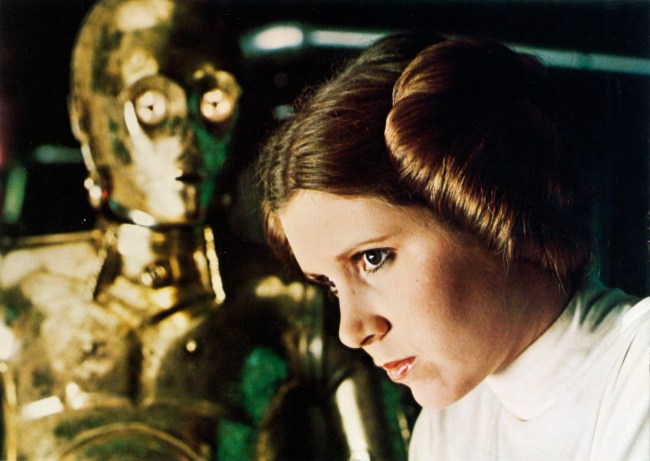
Princess Leia mattered enormously in that equation, too. The late Carrie Fisher’s character was sarcastic, politically outspoken, armed, and constantly irritated by the men around her. That energy was unusually feminist for a heroine then, predating even Sigourney Weaver‘s iconic starring role in 1979’s “Alien.”
That tidbit of sci-fi history makes Disney sending “The Mandalorian and Grogu” into theaters now — with Weaver herself finally joining the franchise as Colonel Ward — both oddly symbolic and uncomfortably nerve-racking. For decades, Weaver’s action-heavy performance as “Alien” hero Ellen Ripley represented the sort of female authority figure that sci-fi fandom generally prided itself on embracing.
But in a fragmented modern culture, even the arrival of a literal living legend could risk revealing too much about the present moment. Not because audiences suddenly stopped responding to great actresses like Weaver, but because Kennedy’s time at “Star Wars” foregrounded her and other women’s involvement in the world’s biggest piece of sci-fi IP as an ideological event — instead of an artistic one.

When it comes to the global “Star Wars” audience, that lingering impression hurts almost everyone. Yes, representation for women and girls in sci-fi is still critically important. But ensuring that “Star Wars” was sincerely hospitable for everyone in the movie-watching world was always going to be extraordinarily difficult, and Kennedy’s failure to even sufficiently anchor her 14-year attempt made it impossible.
After the Party (or, Cleaning Up the Cantina)
Now, women and girls are welcomed as Disney consumers, while select assholes on the audience side still say they’re not real “Star Wars” fans. The celebrity women of “Star Wars” are still hyper-visible representations of its decline, too, and they continue to take unjustified heat for the cultural collapse of a historic franchise that actually started coming undone the minute Lucas sold it.
That’s partly why discussions about “Star Wars” can sometimes feel vaguely radioactive, even among otherwise normal cinephiles. Depending on who’s talking, “Star Wars” can become a conduit for fighting about gender, politics, consumer culture, media nostalgia, late-stage capitalism, or the precarious state of democracy itself. One nerd sees a hopeful allegory about resisting authoritarianism. Another nerd perceives an attack on their worldview hiding inside entertainment they used to like.

These days, it feels as if every conversation about “Star Wars” carries the underlying tension of a stranger demanding their chance to explain exactly who ruined what and why. Worse, the one universal takeaway seems to be that the franchise was getting flattened into generic IP maintenance anyway.
Seeing Weaver on posters for “The Mandalorian and Grogu,” which is still tracking for a solid opening weekend at the box office, it hurts to realize how often women wind up inheriting the exhausted versions of what should have been wonderful experiences. No disrespect to director Jon Favreau, but if the best contemporary “Star Wars” can offer female audiences in 2026 is yet another film helmed by a man… that may or may not require multiple seasons of Disney+ programming to meaningfully decode? Well, that’s not the triumphant forecast for sci-fi fandom us females were promised, either.
For me, at least, the present reality of “Star Wars” feels like showing up to a big party way too late — after the cantina lights have already come on and those no-good nerf-herders start wandering home. The viral joy of “Baby Yoda” in 2019 seems so impossibly far away now, but I also can’t remember if it was honestly much fun back then. Even glancing around at other late “Star Wars” arrivals, many of them parents and young kids, I just can’t find the will or enthusiasm to talk about this anymore.
Because the truth is, I can’t ever be sure what someone means when they say Disney ruined “Star Wars.” Not really, right? So, this time, for your sake and mine: “I don’t even want to get into it.”
Disney’s “The Mandalorian and Grogu” is in theaters now.