Get a daily rundown of the top stories on Urban Milwaukee
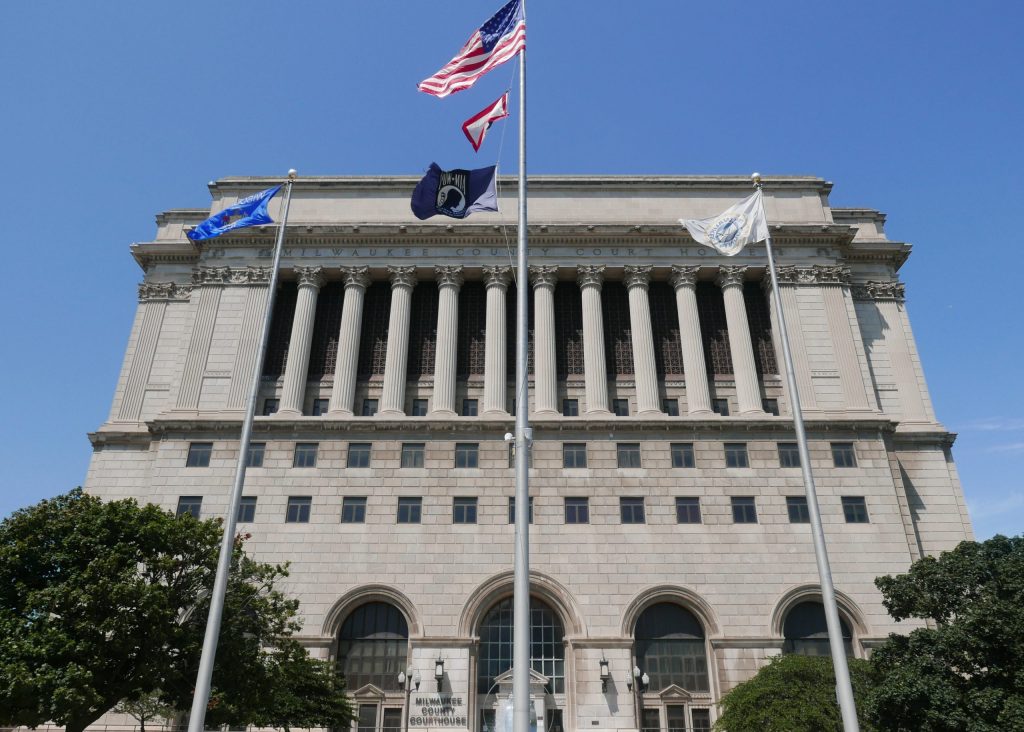
Milwaukee County Courthouse. Photo by Graham Kilmer.
Some Milwaukee County supervisors continue to demand answers on the health care contract debacle from earlier this year.
During a meeting of the Milwaukee County Board’s Committee on Finance Thursday, supervisors Steve Taylor and Felesia Martin demanded greater explanation for how the contract covering the county’s employee health care plan was allowed to expire.
“I’m still not comfortable knowing how the hell we got here,” said Taylor, who chairs the committee. “And I said this in my email to [County Executive David Crowley] if more people need to lose their jobs, that’s fine.”
During and after the meeting, Crowley administration officials shrugged off responsibility for explaining what specifically happened and who made mistakes that led to a lapse in the county’s health benefits contract, which covers the approximately $450 million employee health plan.
In February, county officials revealed that the Department of Human Resources (HR) had allowed the contract to lapse, leaving county employees concerned about their access to health care and putting supervisors in a position to rush through approval of a contract without independently verified financial data.
Immediately after the failure became public, the HR staffer responsible for managing the contract, Tony Maze, was fired. Since then, HR Director Margo Franklin has resigned. The county executive’s office maintains she resigned for personal reasons and was not asked to resign because of the contract debacle. Her resignation letter, however, is being withheld from the public because it is part of a personnel investigation at the county.
Get a daily rundown of the Milwaukee stories
Administration officials, including Strategy Director Isaac Rowlett and Acting Deputy Chief of Staff Jeremy Lucas, appeared before the Finance Committee, outlining how the administration has responded to the failure since February. The administration is interviewing candidates to replace Maze, reviewing contract processes, and meeting with the county’s health benefits manager, United Healthcare, and its health benefits consultant, Willis Towers Watson.
“This is not what I asked for when we created this file,” Taylor said. “You’ve corrected a lot of the mistakes made, but we still don’t really know how the hell we got here.”
The timelines provided shortly after the contract lapse was revealed are “rank amateur at best,” Taylor said, adding that he wants to see emails and a detailed timeline showing who knew about the contract, the deadline and when they knew it.
Martin echoed Taylor’s comments.
“That’s crap to say we’re focused on the future. You can’t focus on the future if you have not understood what happened in the past,” Martin said. “And as the decision makers for this, we need to know. I’m not comfortable making decisions blindly anymore. Moving forward, when this crap happens, my vote is always going to be no.”
After the meeting, a spokesperson for Crowley reached out to Urban Milwaukee and suggested the independent Office of the Comptroller should provide the detail Taylor and Martin were looking for in its audit of the county benefits program. In March, the county board passed a resolution requesting an audit of the health care benefits program.
“You should ask the Comptroller if that will be included in their audit,” the spokesperson told Urban Milwaukee.
Reached for comment, Comptroller Liz Sumner said she has already outlined the scope of the audit for the county executive’s office, and no, it does not include a detailed timeline, complete with emails or identifying which individual actors made mistakes. She even referenced the legislative language in the county board resolution, saying it appears to be asking for a systematic review of the contract process and potential failures in following it. An audit looks for systemic failures and how to fix them going forward, she said.
“So as far as the timelines are concerned, those would not be covered in the audit,” she said.
It was the comptroller’s office that flagged problems with the health care contract for county supervisors in February. The Crowley administration allowed Maze to submit the contract to the board without first explaining that it had lapsed. Sumner and her staffers took the floor at a meeting to warn supervisors about the lapse and share underlying concerns about how the project was bid out and drafted.
Former HR Director Franklin responded by releasing a timeline showing meetings between the comptroller’s office and Maze. But these were financial meetings for purposes of the 2026 budget. In reaction, Sumner told Urban Milwaukee it appeared drafted “to make my office look bad.”
After the meeting Thursday, Crowley’s aide Lucas told Taylor the timeline and documentation he was looking for would be in the comptroller’s audit. “That’s good enough for me, and it can wait for the audit, if that’s going to be the case,” Taylor said.
Taylor, who works closely with the administration on major county projects like the planned $500 million courthouse, also told Urban Milwaukee he’s interested in comptroller’s role in the health care debacle, too. “I want to see the emails,” he said, ticking off names of comptroller staffers, as well as Sumner. “No one could pick up the phone and call [former HR Director] Margo Franklin. Nobody reached out to his boss ever, never once?”
Comptroller Audit Services Manager Jennifer Folliard has previously said her office never saw the full contract, only a sliver of the language relating to audits, and that Maze stonewalled them when they tried to obtain a copy of the full contract. The comptroller’s audit services division is also not traditionally tasked with managing contract deadlines. Maze’s own boss, Franklin, previously laid the blame squarely at the feet of Maze.
Unless supervisors legislate their request, it is unlikely they will receive the desired answers from the comptroller’s audit or the administration. Taylor suggested at the meeting Thursday that he’s prepared to do just that.
“I think it’d be better for you just to present it,” he said. “But I mean, how would it look if supervisors decide we need to do open records requests of the administration?”