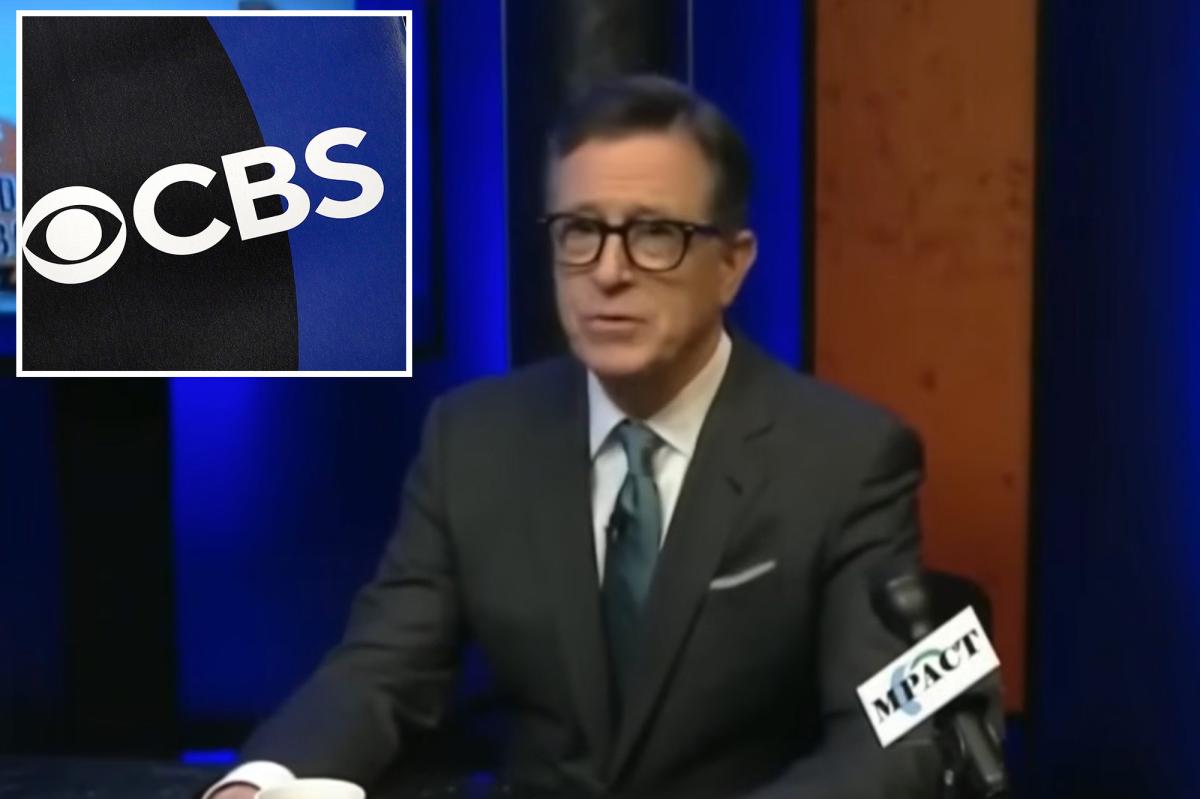
CBS yanked copyright takedown notices targeting uploads of Stephen Colbert’s surprise return to a tiny Michigan public-access TV show in the wake of online backlash.
The Paramount-owned network had been issuing the notices against YouTube users who reposted Colbert’s appearance on “Only in Monroe,” the Monroe Community Media public-access program that the comic famously hosted once in 2015 before taking over CBS’ “Late Show.”
CBS Studios financed and produced the episode that aired Friday and went viral online over the weekend. Some fans complained online about receiving notices to remove their pirated versions of the show from their accounts.
CBS quickly backtracked as critics accused the company of censorship. News of the decision was first reported by Variety.
“Stephen Colbert’s return to Monroe in the ‘Only in Monroe’ episode was financed and produced by CBS Studios and was posted on Stephen Colbert’s YouTube channel in collaboration with Monroe Community Media and ‘The Late Show’s’ YouTube channels,” a CBS spokesperson told The Post.
“As is our regular practice, we send copyright notices to unauthorized websites that post copyrighted content from CBS and our network/studio talent such as Stephen Colbert.
“However, for this episode, we have decided to waive further enforcement of this standard industry practice until additional review,” the spokesperson concluded.
The takedown notices appeared to be routine copyright enforcement by a major media company seeking to protect intellectual property it financed and owned, according to former CBS exec Derek Reisfield, who co-founded MarketWatch.
“It looks like CBS’ Legal Department was following its standard procedures,” he told The Post, adding that networks regularly move to protect copyrighted material that’s posted online without authorization.
Reisfield questioned why Colbert partnered with CBS on the Monroe production in the first place.
“The real question in my mind is why Stephen Colbert didn’t just do it on his own and have a clean break with CBS,” Reisfield told The Post.
Colbert’s Monroe appearance was framed as a nostalgic return to the stripped-down public-access roots that bookended his 11-year CBS tenure.
The host first appeared on “Only in Monroe” a few months before debuting “The Late Show with Stephen Colbert,” in what many viewed as a quirky rehearsal for network television.
His return last week came less than 24 hours after his final CBS broadcast.
“Since I was last here in Monroe, Michigan, I spent 11 years as the primary host of ‘The Late Show with Stephen Colbert’ on CBS, which came to an end last night,” he said.
“It’s been an excruciating 23 hours without being on TV,” Colbert added with his trademark self-deprecation.
The funnyman couldn’t resist launching some zingers at his former corporate bosses, repeatedly mocking CBS and Paramount during the low-budget Monroe production.
Thanking Monroe Community Media for giving him airtime less than a day after his “Late Show” exit, Colbert joked he was happy to appear “before they also get acquired by Paramount.”
Later, after remarking that the tiny public-access operation had “lost a lot of money making the show tonight,” he deadpanned: “Now I know how CBS felt.”
He even mocked the network’s streaming struggles while explaining viewers could watch online, saying streaming was something he “promised not to learn about while I was on CBS” before adding: “Evidently, CBS also decided not to learn about it.”
The Monroe special featured appearances from Jack White, Jeff Daniels, Steve Buscemi, Byron Allen and Eminem.
Unofficial YouTube uploads quickly exploded online — in some cases outperforming Colbert’s official upload.
One repost from a channel called “The Desk” racked up more than 620,000 views, according to Variety, compared with roughly 392,000 views on Colbert’s official page at the time.
Reisfield said CBS likely backed down because the optics of aggressively policing a sentimental public-access-style farewell weren’t worth the headache — particularly given Colbert’s ongoing popularity with viewers.
“I think the general public, and especially the Colbert fans, feels more affinity and alignment with Colbert than CBS corporate,” he said.
“My guess is in the overall scheme of things, especially since this is a one-off production and the CBS relationship with Colbert is over, someone at corporate decided it wasn’t worth the hassle.”
Reisfield predicted that the comedian could ultimately thrive outside the traditional television system by leveraging his large audience directly online.
“He has a large, dedicated following and can probably launch something successful using social media channels,” Reisfield told The Post. “He will have to be an entrepreneur as well as a comedian. It’s very doable for him.”
The Post has sought comment from Monroe Community Media.