Key officials responsible for leading US research on infectious disease threats have been barred from speaking directly with the World Health Organization — effectively shutting some of them out of the global discussions on virus outbreaks, according to documents and multiple sources who spoke to CNN.
The Trump administration issued the directive stopping individuals at the National Institute for Allergy and Infectious Diseases from communicating with the WHO.
The federal health subagency was led for decades by Dr. Anthony Fauci and oversaw developing treatments for public health emergencies from HIV/AIDs to Covid-19.
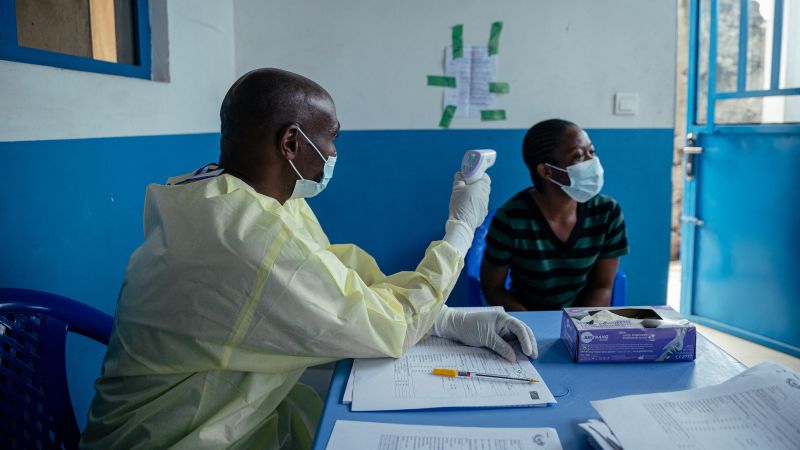
The prohibition has been in place during an outbreak of hantavirus that some Americans have been exposed to. The communication limits were relaxed slightly in the past week as another virus outbreak — an unfolding Ebola epidemic centered in the Democratic Republic of Congo — intensified.
Now, some NIAID officials can attend virtual WHO meetings, but only in small groups and only in a “listening capacity,” according to a May 18 email from a senior NIAID official to staff obtained by CNN. Any follow-up to those meetings would be handled by the Department of Health and Human Services, NIAID’s parent agency.
“We’ll be operating in the same manner for Ebola as we have been doing for Hantavirus, assembling a small groups of experts — no more than three — to participate,” the email said. “Should we have legitimate research questions or countermeasure testing ideas, we can bring those up through the proper chain of command.”
The restrictions hobble quick cooperation with global counterparts, multiple current and former health officials said. One staffer characterized it as unheard of during a US response to emerging public health emergencies.

The directive is part of a broader Trump administration retreat from participation in global health forums — the US withdrew from the WHO in January at President Donald Trump’s direction, a move that was widely criticized by public health officials — and as many US health agencies are operating with interim heads.
Among the vacant positions are the director of the infectious disease agency; surgeon general; head of the Food and Drug Administration; deputy health secretary; and head of the Centers for Disease Control and Prevention — a leadership vacuum that observers say is unprecedented.
A spokesperson for the Department of Health and Human Services said it “engages with the WHO to support information sharing and coordination during infectious disease outbreaks” through the CDC — which is on the ground in disease outbreaks — and it is “fully equipped to protect Americans and mitigate risks.”
“Teams across the Department coordinate on key response areas, including contact tracing, diagnostics, and medical countermeasures, to avoid duplication and reduce confusion in outbreak response efforts,” the spokesperson said.
When American passengers from a hantavirus-stricken cruise ship landed in Nebraska, it was Assistant Secretary of Health Brian Christine who was dispatched to the Omaha hospital where patients were being monitored.
Christine, a penile implant expert with a history of far-right comments, is not in charge of the government’s hantavirus response. But he was sent as the administration’s public face because a more senior health official was not available, according to a source familiar with the decision-making.

Earlier this month, Trump tapped his third nominees for both surgeon general and CDC director.
The surgeon general post — commonly known as the nation’s doctor — has never been filled in this administration. The only confirmed CDC director served for less than a month.
The roles are still unlikely to be filled any time soon. Senate confirmation paperwork has yet to be filed for either, and there is no imminent plan to bring the nominees in for Senate hearings, according to people familiar with the logistics.
The FDA lost its commissioner this month, and multiple senior CDC officials exited the agency last year and have not been replaced.
Taken together, it’s an unprecedented moment for national health leadership, said Dan Jernigan, a former CDC official who resigned after Health and Human Services Secretary Robert F. Kennedy Jr. ousted Susan Monarez, the sole confirmed director of this administration, last August.
“Not in my 31 years at CDC” has there been a moment like this, said Jernigan, noting that a slew of other top positions are also unfilled.
The restrictions given to the National Institute for Allergy and Infectious Diseases come as the department is also leaderless.
NIAID had been led by an acting director, pathologist Dr. Jeffery Taubenberger, since April 2025 — but two Democratic senators revealed in a hearing last week that he had stepped down. HHS declined to comment on Taubenberger’s departure.
Asked about the leadership vacancies, the HHS spokesperson said the agency has made “historic” progress this past year and the health department “looks forward to the swift confirmation of the current nominees.”
The limited cooperation with the WHO is a vestige of residual Trump and Republican frustration for the way the organization handled the Covid-19 pandemic, said Jeremy Konyndyk, president of Refugees International and a former Obama and Biden administration State Department official.
Chains of communication that previously existed but have now been wiped out would have alerted US health officials sooner to the unfolding Ebola crisis, Konyndyk said.
“We have public health leadership in this country now that have written off most of the institutions with global health,” he said.
At the same time, several of the on-the-ground medical organizations in the Democratic Republic of Congo and neighboring countries have been severely hampered. They were previously funded by the US Agency for International Development, a division of the State Department that was dismantled amid the sweeping cuts made by the Department of Government Efficiency last year.

“If there were multiple US government health partners seeing clusters of unexplained viral hemorrhagic fever, they would have been sending that up the chain. Except that they didn’t really have anyone to send it up the chain to anymore,” Konyndyk said.
A senior State Department official dismissed the argument that the US withdrawal from the WHO, US funding cuts, or the dismantling of USAID had hampered the identification or response to the Ebola outbreak.
Secretary of State Marco Rubio has repeatedly blamed the WHO for failing to alert the public about the Ebola outbreak earlier.
Last week, the WHO upgraded its assessment of the Ebola outbreak risk level from “high” to “very high” in the Democratic Republic of Congo. The international risk remains low.
No cases have been seen in the US, but US-bound flights with passengers who were recently in the Ebola-affected region must, depending on their time of departure, land at one of three airports — Dulles International Airport near Washington, George Bush Intercontinental in Houston, or Hartsfield-Jackson International in Atlanta — for health screening.
One American, a doctor, contracted the illness in Africa. He is being cared for in a German hospital, where his family is also in quarantine. Another American is being monitored.
The CDC has said it was working “around the clock” with partners to address the Ebola outbreak and plans to deploy seven additional experts from Atlanta to the Democratic Republic of Congo and Uganda to help.
No cases of hantavirus have been identified in the US, but 18 people who were passengers on the ship that was the site of the outbreak remain in quarantine in Nebraska. Dozens of other people who disembarked from the ship before the outbreak was confirmed are under monitoring, along with people who were on flights with confirmed cases.