After years of escalating anti-LGBTQ+ rhetoric in American politics, a new national report suggests the consequences are no longer confined to campaign ads, legislative fights, or online outrage. For many LGBTQ+ candidates, the threats have become intensely personal and increasingly physical.
The threats arrive in direct messages, voicemail inboxes, comment sections, and late-night emails. Sometimes they follow candidates home.
One LGBTQ+ candidate reported that a neighbor shot at their house after they advocated for transgender rights. Another described being shoved off a porch while canvassing. Others said strangers photographed their homes, stalked their families online, or threatened sexual violence against their children.
For a growing number of LGBTQ+ candidates across the United States, political campaigning increasingly resembles threat management.
A new report released by the LGBTQ+ Victory Institute found that harassment, intimidation, and political violence have become a defining feature of modern LGBTQ+ campaigns, reshaping not only how candidates run for office but also whether they choose to run at all.
The authors of “Threats on the Trail: Experiences With Political Violence Among LGBTQ+ Candidates in the USA,” surveyed 215 LGBTQ+ candidates who ran for office between 2023 and 2025 across 42 states, Puerto Rico, and Washington, D.C.
Researchers found nearly nine in 10 candidates worried that running as out LGBTQ+ people would increase their risk of harassment or attack, while four in five feared physical violence.
Those fears were often realized. Nearly two-thirds of respondents experienced in-person harassment during campaigns. Almost eight in 10 encountered online abuse. One in three candidates reported receiving online death threats.
Political violence has increasingly become a feature of American public life, touching judges, lawmakers, election workers, journalists, and candidates across the political spectrum. But LGBTQ+ advocates say queer and transgender candidates are increasingly absorbing a uniquely personal form of hostility, one fueled by years of escalating anti-LGBTQ+ rhetoric and legislation.
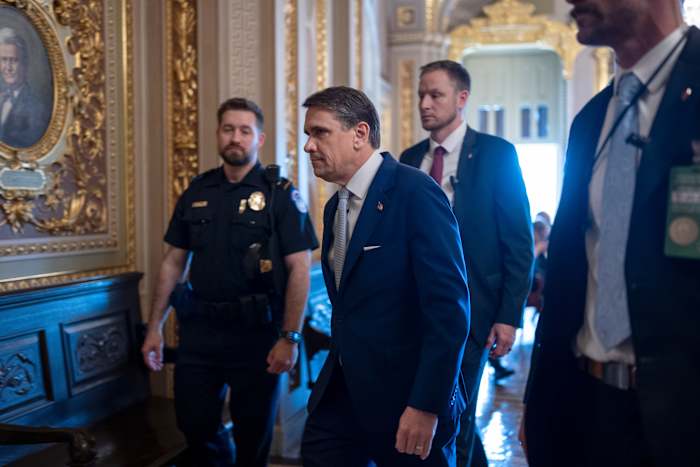
Evan Low, president and CEO of the LGBTQ+ Victory Institute and a former California state legislator, said the organization increasingly views candidate safety as fundamental democratic infrastructure. Low previously served as the nation’s youngest out LGBTQ+ mayor when he led Campbell, California, and later spent a decade in the California State Assembly representing Silicon Valley communities.
“Unfortunately, it’s not just about simply the individual harassment, but whether or not LGBT people can safely participate in our American democracy,” Low told The Advocate in an interview. “If members of our community don’t feel safe, how do we participate in American democracy?”
Political violence is no longer just a safety issue. It is becoming a structural barrier to representation.
Candidates described altering campaign schedules, avoiding public appearances, limiting social media activity, and withholding canvassing locations out of fear that harassment could escalate into physical attacks.
More than half of the respondents said safety concerns affected where or how they campaigned. Nearly one in five described the impact as significant. For transgender candidates, especially those in suburban and Republican-leaning districts, the risks are often even more acute.
Related: FBI report: Despite overall crime drop, anti-LGBTQ+ violence remains alarmingly high
One respondent recalled receiving threats warning them not to come near schools because they were trans. Another said local Democrats urged them not to run out as their authentic selves. Candidates spoke about chronic stress, counseling, PTSD, and the psychological exhaustion of reading degrading messages day after day while still trying to appear publicly composed.
“It is hard to be the best candidate you can be when you are dealing with threats and bullying,” one candidate said in the report. Another described developing hypervigilance after repeated attacks.
The report argues that political violence targeting LGBTQ+ candidates has become, in effect, a mental health crisis embedded inside democratic participation itself. Low said the Victory Institute increasingly treats candidate safety and emotional well-being as part of democratic infrastructure rather than optional support services.
“We treat candidate safety and well-being as an essential component of our Democratic infrastructure,” Low said.
That now includes specialized training programs for transgender candidates, mental health initiatives, and conversations about security planning that once would have seemed extraordinary for local or state legislative races. But many candidates still cannot afford meaningful protection. Fewer than 1 in 10 respondents said they could afford private security or a formal law enforcement presence during campaigns.
Some described installing cameras and home surveillance systems instead. Others said they abandoned security discussions because campaigns lacked the money. “I wanted to [hire private security], but it was too expensive,” one candidate told researchers. Low said donors increasingly need to consider candidate protection a legitimate campaign expense.
“Yes, yes, absolutely,” he said when asked whether supporters should consider funding security measures for LGBTQ+ candidates. He also drew a direct connection between the current political climate and the hostility candidates are experiencing.
“Our opposition has given the license to discriminate, license to attack, license to be emboldened by utilizing hate speech, by demonizing who we are,” Low said. “Where there are laws on the books that criminalize our existence, then the next step naturally is the demonization of our very livelihoods and our existence.”
Still, despite the threats, LGBTQ+ candidates continue running in record numbers. The report found that nearly all respondents believed being LGBTQ+ ultimately strengthened their candidacies, deepening their empathy, resilience, and connection to community. Low pointed to the more than 1,300 out LGBTQ+ elected officials now serving nationwide as evidence that the pipeline has not collapsed under pressure.
“Members of our community have been historically persecuted, targeted, and yet we continue to persevere,” he said.