
Celebrities’ plans to have children are being used as material for television variety shows. Captured from TV Chosun
Celebrity couples discussing pregnancy plans and fertility struggles have become a growing theme in South Korean television variety shows, reflecting a society grappling with record-low birthrates and rising infertility concerns. While such programs have been praised for openly addressing issues that were once considered taboo, criticism is also growing over increasingly explicit discussions aired on mainstream entertainment programs.
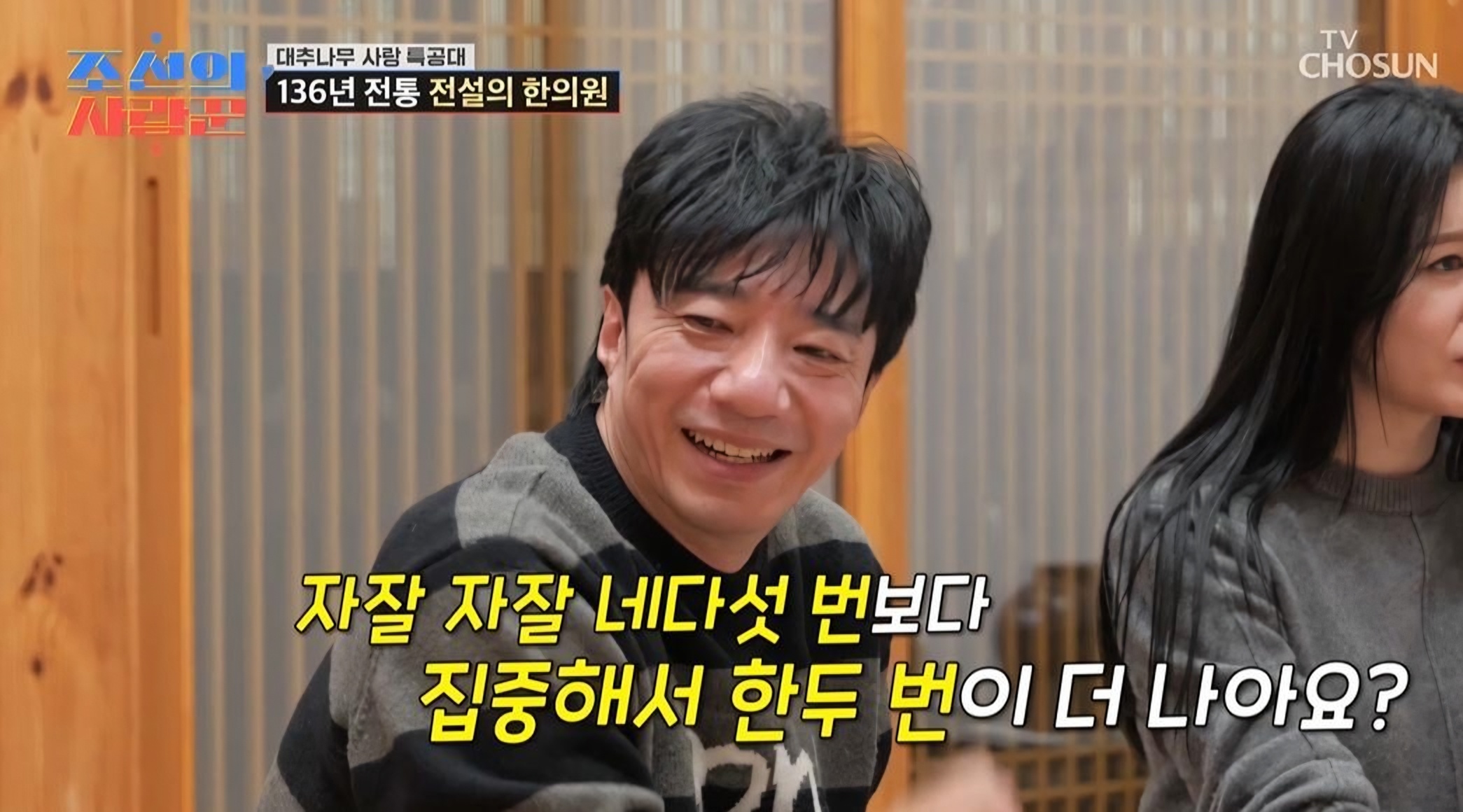
Singer Bae Ki-sung and his wife recently revealed details of their efforts to conceive on the TV Chosun variety show “Lovers of Joseon.”
The couple said they had been trying to have a child, with Bae revealing that he was even diagnosed with sudden hearing loss during the process.
“One of my ears can barely hear now,” Bae said. “Because we wanted to have a baby, my wife and I had sex every day for eight days.”
His highly personal confession was broadcast without much filtering, drawing mixed reactions from viewers.
The issue is not limited to one couple. Comedian Kim Jun-ho and comedian Kim Ji-min have also publicly documented their efforts to prepare for pregnancy after announcing marriage plans.
Programs have shown Kim undergoing sperm motility tests, registering with a sperm bank and preparing for in vitro fertilization procedures as the couple openly shares their fertility journey.
Private matters increasingly exposed on entertainment programs
Korean variety programs that once focused mainly on dating and marriage are increasingly venturing into deeply private territory, including fertility treatment and pregnancy preparation.
Some viewers see the trend as a positive social change that helps normalize discussions about infertility and offers comfort to couples facing similar struggles.
Critics, however, argue that the issue lies in how the topics are being presented. Provocative remarks and overly detailed revelations about private lives are increasingly being used as entertainment material and comedic devices, prompting discomfort among audiences.
Critics say infertility, pregnancy and childbirth involve emotional and physical burdens that differ fundamentally from ordinary entertainment topics.
Many couples endure years of psychological stress, disappointment and physically demanding medical procedures. Some programs are accused of treating such experiences too lightly or sensationalizing them for ratings.
Several controversial remarks recently aired on programs rated suitable for viewers aged 15 and older, meaning teenagers can easily access the content despite sexual references and highly personal disclosures.
Kim Heon-sik, a pop culture critic, said discussing the realities of pregnancy and childbirth on television can be meaningful to some extent.
“However, if these issues are consumed merely as entertainment material rather than approached from the perspective of family and society, there is concern that their original value may become distorted,” Kim said.
“Particularly when exposed to teenagers, such content could create distorted perceptions, so caution is needed,” he added.
Provocative content undeniably attracts attention. Celebrity couples openly discussing fertility treatments and pregnancy preparations have become a major source of buzz for Korean entertainment programs.
Still, critics argue that generating publicity alone cannot be the ultimate goal of television entertainment.
As excessive exposure and increasingly provocative comments continue across programs, some warn that viewer fatigue could eventually turn into broader backlash against the genre itself.
The debate is now raising broader questions about where entertainment should draw the line between openness and oversharing.
This article from the Hankook Ilbo, the sister publication of The Korea Times, is translated by a generative AI system and edited by The Korea Times.