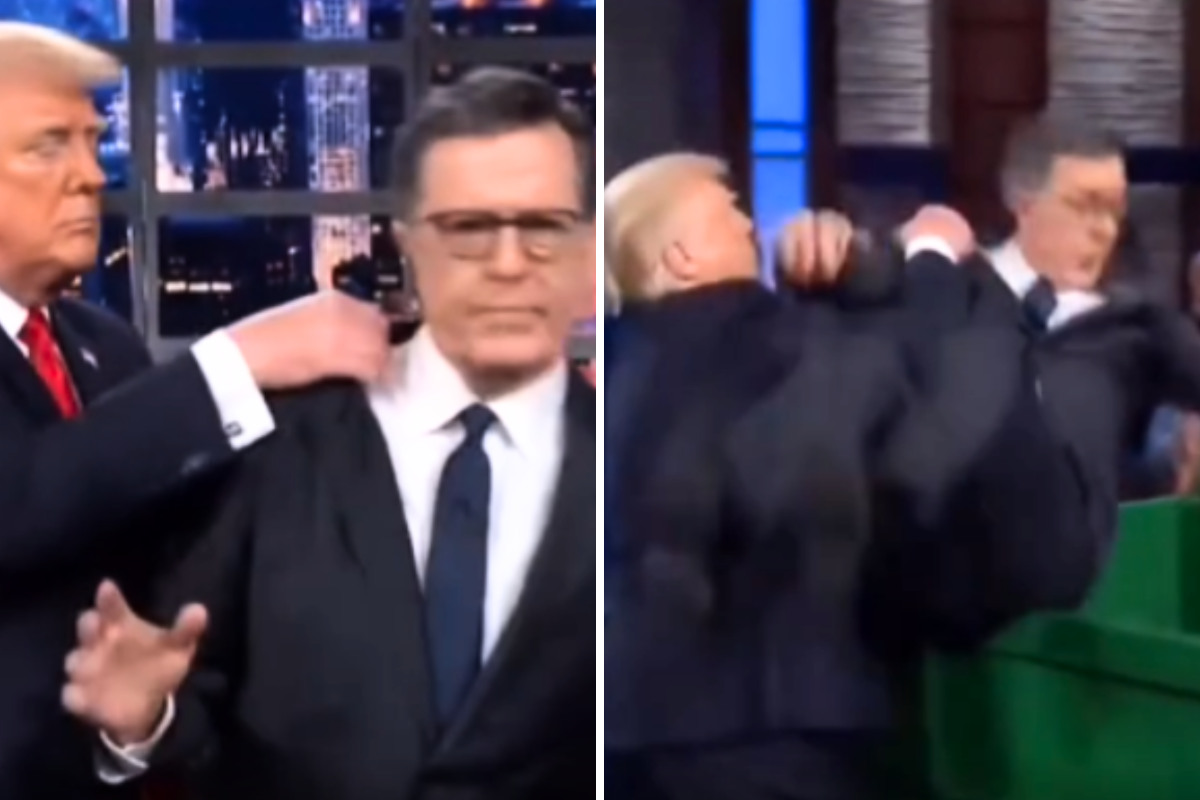
President Donald Trump has shared an AI-generated video depicting Stephen Colbert being thrown into the trash, escalating a long-running feud between the two just one day after the late-night host’s final show aired.
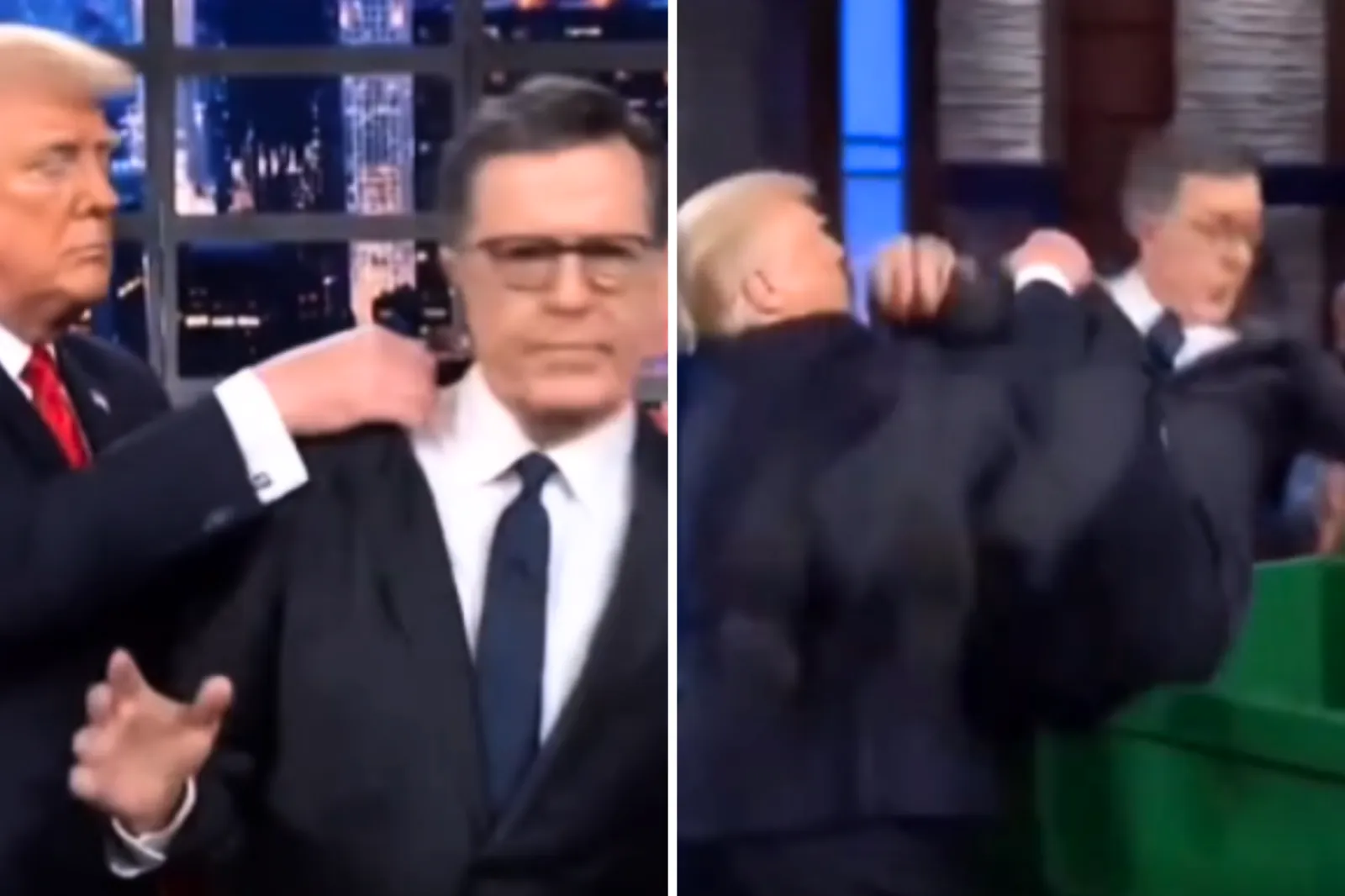
On Friday, Trump posted an AI-generated clip on Truth Social showing Colbert being lifted and thrown into a green dumpster before dancing to “YMCA,” a staple of Trump’s rallies and campaign events, mocking the host’s departure from CBS.
It underscores how political figures are increasingly using synthetic media to target critics, raising fresh questions about misinformation and tone in public discourse.
The clip deepens a years-long feud between Trump and Colbert while drawing attention to the growing role of AI-generated content in political messaging.
Similar AI-driven tactics have also surfaced in the Los Angeles mayoral race, where candidate Spencer Pratt has amplified viral, Hollywood-style clips that have racked up millions of views.
Watch The Video
Why It Matters
The clash comes at the intersection of politics, entertainment and emerging technology, as AI-generated content becomes more realistic and widely shared. It also follows the end of The Late Show with Stephen Colbert, removing one of Trump’s most consistent late-night critics from network television, with the series finale airing as an extended episode on May 21, 2026.
What To Know
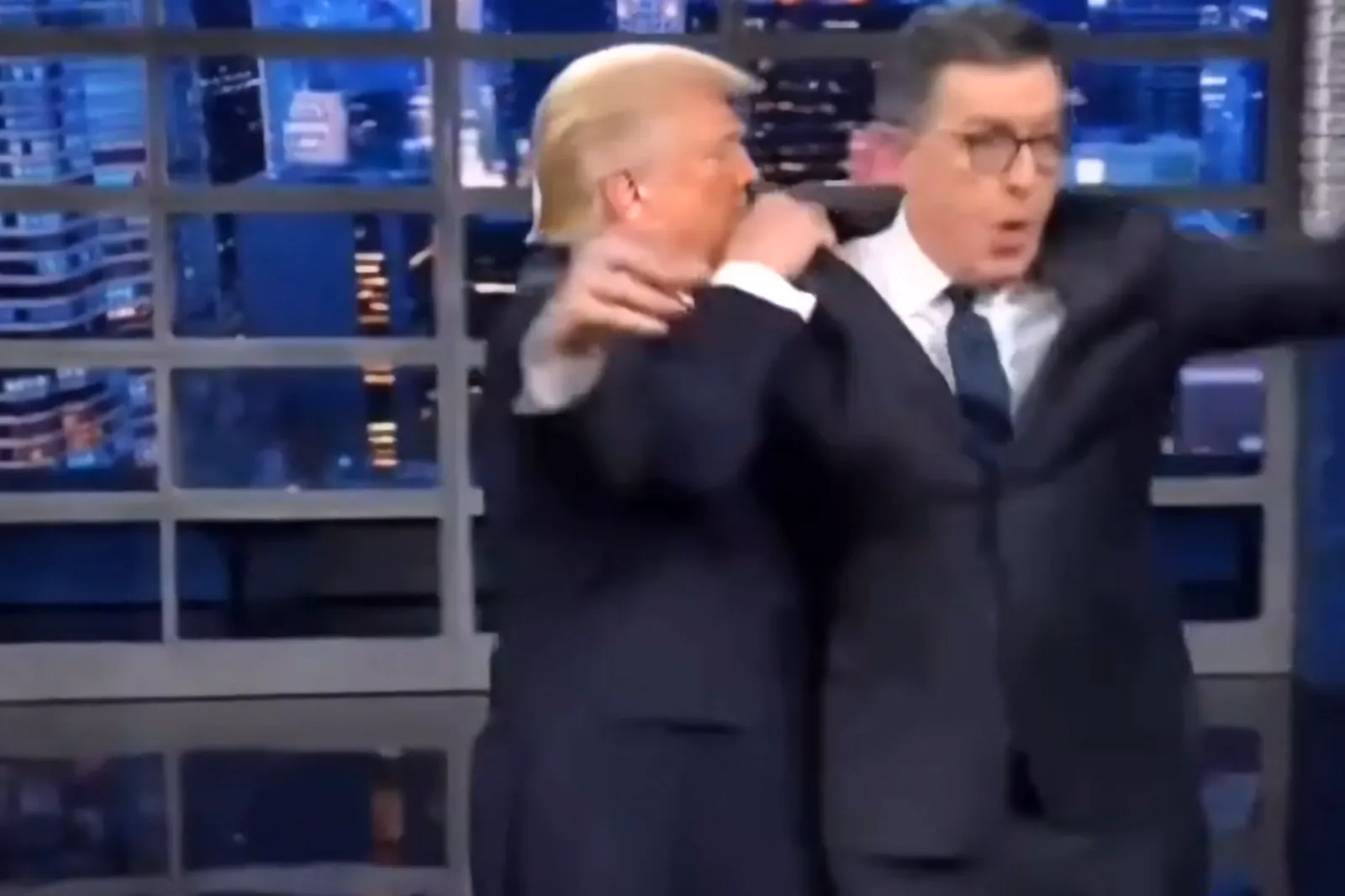
The video, posted to Trump’s Truth Social account, appears to use edited footage of The Late Show set combined with AI-generated elements to create a staged scene.
In the clip, Colbert is shown delivering what appears to be a farewell-style monologue, saying: “Welcome back to our final broadcast, ladies and gentlemen.”
Moments later, Trump appears in the scene, grabs Colbert and throws him into a large green dumpster positioned on the stage.
The video then cuts to Trump dancing in front of the dumpster to the Village People’s “YMCA,” while a studio audience looks on.
Alongside the clip, Trump posted further commentary celebrating Colbert’s departure from CBS and suggesting other late-night hosts could soon follow.
In one Truth Social post, Trump wrote: “Stephen Colbert’s firing from CBS was the ‘Beginning of the End’ for untalented, nasty, highly overpaid, not funny, and very poorly rated Late Night Television Hosts. Others, of even less talent, to soon follow.”
The doctored clip builds on earlier posts in which Trump criticized Colbert’s ratings and performance following the announcement that The Late Show would end.

A Long-Running Feud
Trump and Colbert have traded barbs for years, with their rivalry intensifying during Trump’s presidency.
Colbert emerged as one of Trump’s most outspoken critics in late-night television, frequently using monologues to challenge the president’s policies, rhetoric, and public statements.
He has been one of Trump’s most persistent late-night critics across both of his terms, with a 2017 Newsweek analysis finding he delivered 337 Trump-focused jokes in the first 100 days alone.
Trump, in turn, regularly has responded on social media, branding Colbert “no talent” and criticizing the show’s ratings.
That pattern continued up to Colbert’s final episode, which aired without directly mentioning Trump—a notable departure from their usual dynamic.
Despite avoiding the president in his farewell show, Colbert was still a focus of Trump’s reaction afterward, with multiple Truth Social posts targeting the host’s career and the broader state of late-night television.
End Of An Era For Late-Night TV
CBS announced in July 2025 that The Late Show would be ending after Colbert’s run, describing the decision as financially driven and unrelated to the show’s content or performance.
Colbert used his final episode to reflect on his 11-season tenure, opting for a celebratory tone rather than political commentary. Prominent figures including Barack Obama, Hillary Clinton and Kamala Harris later praised his work and influence.
Trump, however, framed the cancellation differently, presenting it as part of a broader decline in late-night television and using it to criticize other hosts.
The Role Of AI In Political Messaging
The video shared by Trump highlights how AI-generated and manipulated media are becoming increasingly visible in political communication.
While the clip is clearly stylized and satirical in tone, its realism points to broader concerns about how such content can be used to shape narratives, target opponents or blur the line between fact and fabrication.
As AI tools become more accessible, U.S. intelligence officials—including Director of National Intelligence Avril Haines—have warned that the technology can produce “seemingly authentic” deepfakes capable of influencing audiences and spreading false narratives at scale.
For now, Trump’s post has added a new chapter to his feud with Colbert—this time using synthetic imagery to deliver the punchline.